


Description
HDPE ground mats are selected to create temporary access while protecting grass, soil, yards, and finished ground surfaces from rutting and repeated traffic. Buyers should treat the mat as a site-access product, not as a general HDPE sheet.
The most useful question is: what will travel over the mat, on what ground, and for how long? Vehicle type, turning behavior, mud, slope, connector spacing, and manual handling all affect the specification.
How to specify HDPE Ground Mats
The material background can be reviewed through temporary works planning guidance, but the purchase specification should be based on the actual drawing, operating condition, inspection need, and installation method.
How to match ground mats to site conditions
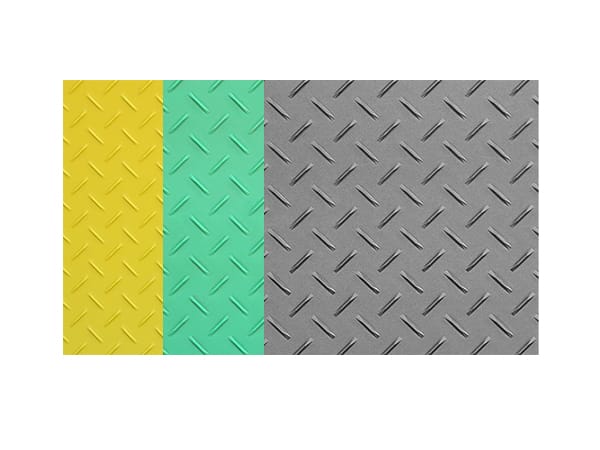
For lawns, landscaping, and pedestrian routes, the buyer usually cares about surface protection, grip, and ease of moving mats by hand. For construction and utility access, the discussion shifts toward rutting risk, vehicle path, turning radius, and recovery after wet weather.
Soft ground needs a wider route plan and more attention to overlap or connection. A hard yard may need mats mainly for floor protection and traction. A single product name does not define those site conditions.
Mat layout matters more than a single mat size
A straight access path is easier to plan than a loading zone, turning pad, or work platform. Buyers should provide route length, route width, entry point, expected turning areas, and whether mats need connector holes.
Storage and lifting should also be considered. A mat that is strong enough for site use still needs to be stacked, cleaned, moved, and counted between projects.
Where ground mats should not be used as a substitute
HDPE ground mats are not direct substitutes for outrigger pads. Ground mats distribute traffic over a route; outrigger pads support concentrated stabilizer loads at specific points.
If the work involves cranes, aerial platforms, or stabilizers, the buyer should review outrigger pad or crane pad options separately and follow equipment and ground-condition requirements.
Application and RFQ checklist
| Pedestrian or event route | Prioritize surface texture, walking comfort, edge layout, and quick installation. |
| Landscaping access | Check turf condition, moisture, machine weight, and route recovery needs. |
| Utility maintenance | Define vehicle path, turning area, connector requirement, and storage method. |
| Industrial yard protection | Confirm floor condition, wheel type, repeated traffic, and cleaning method. |
Related product paths
Buyers comparing this product can also review 4×8 HDPE ground protection mats, UHMWPE outrigger pads, custom crane stabilizer pads. These internal links separate material sheet, machined component, support-pad, and access-mat intent so the product pages do not compete for the same query.
Before requesting a quotation
Send the product name, drawing or target size, thickness, quantity, working environment, surface or machining requirement, tolerance expectation, and packing notes. If the product replaces a failed part, photos of the damaged or worn area can help identify the actual selection problem.
Conclusion
HDPE Ground Mats should be selected around a specific use case, not a generic plastic category. A concise RFQ with application details helps SDYZ Plastic review the suitable material form, processing scope, and repeat-order requirements.
FAQ
What are HDPE ground mats used for?
They are used for temporary access roads, turf protection, event routes, landscaping access, and worksite surface protection.
Are HDPE ground mats the same as 4×8 mats?
Not always. Some buyers need a standard 4×8 format, while others need custom sizes or different layouts for the site route.
Can ground mats support heavy equipment?
Support depends on equipment, tire or track contact, soil condition, route design, and mat specification. Buyers should provide those details before selection.
Do ground mats need connectors?
Connectors are useful when mats must stay aligned during repeated traffic or turning. Straight, light-duty routes may need fewer connection points.
What should be included in an inquiry?
Include route size, ground condition, vehicle type, surface texture preference, connector details, quantity, and storage or transport requirements.