
Selecting the right material is one of the most important decisions in industrial manufacturing. A component may be designed with precise dimensions and excellent engineering, but its actual performance depends heavily on whether the material can withstand the operating environment.
Wear, friction, chemical exposure, temperature changes, and mechanical stress can significantly affect equipment reliability. Choosing an unsuitable material can lead to frequent replacements, unexpected downtime, and increased maintenance costs.
For many decades, metals were the traditional choice for industrial components because of their strength and durability. However, modern industries now require materials that are lighter, easier to process, corrosion-resistant, and capable of providing consistent performance under specific working conditions.
This has led to the increasing adoption of engineering plastics across a wide range of industries.
Unlike standard plastics used for everyday products, engineering plastics are high-performance polymer materials developed for demanding industrial applications. They provide a unique combination of mechanical strength, wear resistance, dimensional stability, chemical resistance, and low-friction performance.
Table of Contents
Today, engineering plastic materials are widely used in:
- Industrial machinery
- Automation equipment
- Conveyor systems
- Food processing equipment
- Automotive manufacturing
- Chemical processing
- Semiconductor production
- Precision mechanical applications
However, choosing the right material is not simply about selecting the strongest option. Different engineering plastics are designed for different challenges.
For example, POM is often selected for precision components that require dimensional accuracy, while UHMW PE is preferred for applications involving continuous friction and wear. PEEK is chosen for environments where high temperature and chemical resistance are essential.
Understanding the characteristics of different engineering plastics helps engineers, manufacturers, and purchasing teams make better material decisions.
This guide provides an overview of the most common engineering plastics, their advantages, applications, and key factors to consider when selecting the right material.
What Are Engineering Plastics?
Engineering plastics are advanced polymer materials designed to perform reliably in industrial environments where conventional plastics cannot meet performance requirements.
They are developed to maintain their mechanical properties under challenging conditions, including:
- Heavy loads
- Continuous movement
- High friction
- Chemical exposure
- Temperature fluctuations
- Long-term operation
Compared with commodity plastics, engineering plastics offer improved technical performance.
Their main advantages include:
| Property | Benefit in Industrial Applications |
|---|---|
| High mechanical strength | Supports structural and load-bearing components |
| Wear resistance | Extends component service life |
| Low friction | Reduces energy loss and maintenance requirements |
| Chemical resistance | Performs well in harsh environments |
| Dimensional stability | Maintains precision during operation |
| Lightweight structure | Helps reduce equipment weight |
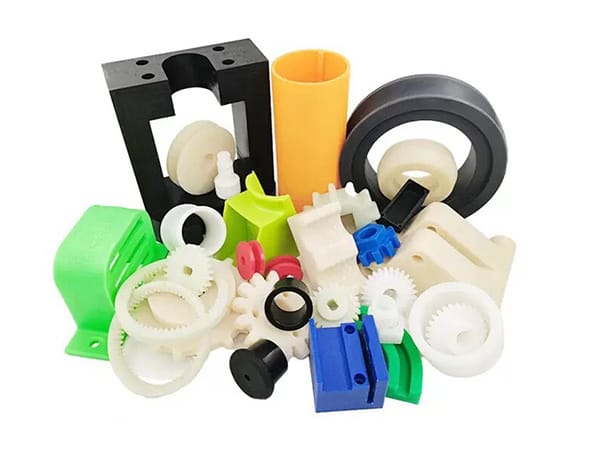
Common engineering plastic components include:
- Gears
- Bearings
- Bushings
- Rollers
- Wear plates
- Guide rails
- Chain guides
- Machine components
- Custom fabricated parts
In many industrial applications, these materials provide advantages that traditional metals cannot easily achieve.
For example, plastic components can reduce operating noise, eliminate corrosion problems, and reduce the need for lubrication.
Engineering Plastics vs Standard Plastics: Understanding the Difference
The term “plastic” covers a wide range of materials, but not all plastics are suitable for industrial applications.
Standard plastics are generally designed for cost efficiency and basic functions, while engineering plastics are developed for performance-critical applications.
| Feature | Standard Plastics | Engineering Plastics |
|---|---|---|
| Mechanical strength | Basic performance | Higher strength and durability |
| Wear resistance | Limited | Designed for friction applications |
| Temperature stability | Lower | Improved thermal performance |
| Precision | Moderate | Better dimensional accuracy |
| Industrial suitability | Limited | Designed for machinery and equipment |
The key difference is that engineering plastics are created to solve specific engineering challenges.
When selecting materials, industrial users usually consider:
- How much load will the component experience?
- How long should the component last?
- Will it be exposed to chemicals or moisture?
- Does it require low friction?
- Does it need precision machining?
A material that performs well in one application may not be suitable for another.
Why Are Engineering Plastics Becoming More Important in Modern Manufacturing?
The demand for engineering plastics continues to grow because industries are looking for materials that improve efficiency, reduce maintenance, and provide reliable long-term performance.
Lightweight Alternative to Metal Components
One of the biggest advantages of engineering plastics is their lightweight design.
Compared with steel or other metals, plastic components can significantly reduce overall equipment weight while maintaining sufficient mechanical performance.
This is especially valuable in industries such as:
- Automation
- Robotics
- Packaging machinery
- Transportation equipment
- Material handling systems
Lower weight can help improve energy efficiency and make equipment easier to operate and maintain.
Reduced Friction and Longer Service Life
Many industrial systems operate continuously with moving parts. Friction between components can cause heat buildup, surface damage, and premature failure.
Engineering plastics with low-friction characteristics help reduce these problems.
Materials such as POM and UHMW PE are commonly used for:
- Sliding guides
- Conveyor components
- Wear strips
- Bearings
- Mechanical movement parts
Their self-lubricating properties allow equipment to operate more smoothly with less maintenance.
Excellent Corrosion Resistance
Corrosion is a major challenge in many industries.
Metal components may require coatings or additional protection when exposed to:
- Chemicals
- Moisture
- Salt environments
- Cleaning agents
Many engineering plastics naturally resist corrosion and maintain stable performance in harsh environments.
HDPE, polypropylene, and UHMW PE are frequently selected for applications requiring chemical and moisture resistance.
Flexible Manufacturing Options
Engineering plastics can be processed using different manufacturing methods, including:
- Cutting
- Machining
- Extrusion
- Fabrication
- CNC processing
This makes them suitable for both standard products and customized industrial solutions.
For companies requiring special dimensions or unique components, working with an experienced plastic sheet manufacturer can help achieve better performance and efficiency.
Key Properties to Consider When Selecting Engineering Plastics
Selecting the right engineering plastic requires understanding the actual operating conditions.
A material should be evaluated based on several important factors.
Mechanical Strength and Load Capacity
Mechanical strength determines whether a material can withstand pressure, impact, and continuous operation.
Applications involving heavy loads require materials with:
- High tensile strength
- Good impact resistance
- Low deformation
- Long fatigue life
Nylon and PEEK are often selected for applications requiring strong mechanical performance.
Wear Resistance
Wear resistance is one of the most important considerations for moving components.
Applications such as conveyor systems and sliding equipment require materials that can withstand repeated contact.
UHMW PE is particularly well known for:
- Excellent abrasion resistance
- Extremely low friction
- High impact resistance
- Long service life
It is commonly used for conveyor wear strips, chain guides, and industrial liners.
Temperature Performance
Different engineering plastics have different temperature capabilities.
Before selecting a material, consider:
- Continuous operating temperature
- Short-term temperature exposure
- Heat generated by friction
For high-temperature applications, advanced materials such as PEEK provide better stability compared with standard engineering plastics.
Chemical Resistance
Chemical exposure can significantly affect material performance.
The correct material choice depends on:
- Type of chemical
- Concentration level
- Exposure duration
- Working temperature
HDPE, PP, and UHMW PE are commonly selected for chemical-resistant applications.
Dimensional Stability
Precision applications require materials that maintain their shape during operation.
POM is widely used for precision components because it has:
- Low moisture absorption
- Excellent dimensional stability
- Good machining performance
This makes it suitable for gears, bearings, and other components requiring accurate dimensions.
Types of Engineering Plastics and Their Industrial Applications
Different engineering plastics are developed to solve different industrial challenges. Each material has its own balance of strength, wear resistance, temperature performance, chemical resistance, and processing characteristics.
Understanding these differences helps manufacturers choose a material that delivers the best performance for a specific application.
POM (Acetal): A Precision Engineering Plastic for Mechanical Components
Polyoxymethylene (POM), also known as Acetal, is one of the most widely used engineering plastics for precision applications.
It is especially valued for its excellent dimensional stability, low friction characteristics, and ability to maintain accurate tolerances during operation.
Unlike some plastic materials that may absorb moisture and change dimensions, POM remains relatively stable in changing environments. This makes it an excellent choice for components where precision and consistent performance are important.
Key Advantages of POM
- Excellent dimensional stability
- Low moisture absorption
- Low friction performance
- Good wear resistance
- High stiffness
- Easy machining capability
Common Applications of POM
POM is frequently used in:
- Precision gears
- Bearings
- Bushings
- Rollers
- Guide components
- Conveyor parts
- Mechanical assemblies
In automation and manufacturing equipment, POM components help maintain smooth movement and reduce friction-related issues.
For applications requiring accurate movement and reliable operation, POM is often preferred over standard plastic materials.
Nylon (PA): A Strong Material for Heavy-Duty Applications
Nylon, also known as Polyamide (PA), is a popular engineering plastic known for its excellent strength, toughness, and wear resistance.
It performs particularly well in applications where components experience repeated mechanical stress, impact, or continuous movement.
Compared with many other plastic materials, nylon provides a strong balance between durability and flexibility.
Key Advantages of Nylon
- High mechanical strength
- Excellent impact resistance
- Good abrasion resistance
- Strong load-bearing capability
- Low friction properties
- Good fatigue resistance
Common Applications of Nylon
Nylon is widely used for:
- Industrial gears
- Rollers
- Bearings
- Bushings
- Mechanical parts
- Conveyor components
In many industrial environments, nylon components can replace metal parts while reducing noise and improving corrosion resistance.
However, nylon absorbs more moisture compared with some other engineering plastics. For applications requiring extremely tight tolerances, environmental conditions should be considered during material selection.
UHMW PE: The Preferred Choice for Wear-Resistant Applications
Ultra High Molecular Weight Polyethylene (UHMW PE) is one of the most recognized wear-resistant engineering plastics available.
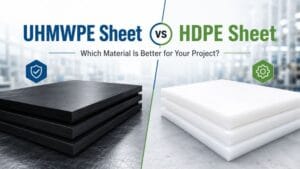
Its extremely low friction coefficient and excellent impact resistance make it ideal for applications involving continuous sliding, material movement, and heavy abrasion.
For industries where equipment reliability and reduced downtime are critical, UHMW PE provides a practical solution.
Key Advantages of UHMW PE
- Outstanding abrasion resistance
- Extremely low friction
- High impact strength
- Self-lubricating performance
- Chemical resistance
- Moisture resistance
Common Applications of UHMW PE Sheet
UHMW PE sheet is commonly used in:
- Conveyor wear strips
- Chain guides
- Sliding plates
- Hopper liners
- Chute liners
- Mining equipment
- Material handling systems
In conveyor systems, UHMW PE helps reduce friction between moving materials and equipment surfaces, improving operating efficiency and extending component life.
For food processing and packaging industries, UHMW PE is also popular because it is easy to clean and resistant to moisture.
HDPE: Durable and Versatile Industrial Plastic Material
High Density Polyethylene (HDPE) is another widely used engineering plastic known for durability, chemical resistance, and excellent moisture performance.
HDPE plastic sheet is commonly selected for applications where reliability, impact resistance, and corrosion protection are required.
Key Properties of HDPE
- Excellent chemical resistance
- High impact strength
- Low moisture absorption
- Lightweight structure
- Good outdoor performance
- Easy fabrication
Typical Applications of HDPE Plastic Sheet
HDPE is commonly used in:
- Chemical storage tanks
- Industrial liners
- Water treatment equipment
- Protective panels
- Fabricated plastic components
- Industrial containers
Because of its balance between performance and cost, HDPE remains a popular choice for many industrial applications.

Polypropylene (PP): Chemical Resistant and Lightweight Material
Polypropylene is a versatile engineering plastic widely used in industries requiring excellent chemical resistance and lightweight performance.
It performs well in environments where exposure to acids, alkalis, moisture, and cleaning chemicals is common.
Advantages of Polypropylene
- Excellent chemical resistance
- Low moisture absorption
- Lightweight
- Good impact resistance
- Easy processing
- Cost-effective performance
Applications of Polypropylene
Common applications include:
- Chemical tanks
- Storage containers
- Laboratory equipment
- Protective covers
- Industrial processing systems
PP is particularly suitable for industries where corrosion resistance is more important than extreme mechanical strength.
PEEK: High-Performance Engineering Plastic for Extreme Conditions
PEEK (Polyether Ether Ketone) represents one of the most advanced engineering plastics available today.
It is designed for applications where standard plastics cannot provide sufficient performance, especially under high temperatures, aggressive chemicals, and demanding mechanical conditions.
Key Advantages of PEEK
- Excellent high-temperature resistance
- Outstanding chemical stability
- High mechanical strength
- Low moisture absorption
- Excellent wear performance
- Long-term reliability
Common Applications of PEEK
PEEK is used in:
- Aerospace components
- Semiconductor equipment
- Medical devices
- Oil and gas applications
- High-temperature machinery
Although PEEK has a higher material cost compared with other engineering plastics, its exceptional performance makes it valuable for specialized applications where reliability is essential.
Engineering Plastics Comparison Guide
The following comparison provides a general overview of common engineering plastic materials.
| Material | Main Advantages | Limitations | Typical Applications |
|---|---|---|---|
| POM | Precision, low friction, dimensional stability | Limited high-temperature performance | Gears, bearings, precision parts |
| Nylon | Strength, toughness, wear resistance | Moisture absorption | Mechanical components |
| UHMW PE | Excellent wear resistance, low friction | Lower stiffness compared with some plastics | Conveyor systems, liners |
| HDPE | Chemical resistance, durability, affordability | Lower temperature capability | Sheets, tanks, industrial liners |
| PP | Chemical resistance, lightweight | Lower mechanical strength | Chemical equipment |
| PEEK | Extreme temperature and chemical performance | Higher material cost | Aerospace and high-performance applications |
Engineering Plastics vs Metal: Which Material Is Better?
Engineering plastics are not designed to replace metals in every situation. Instead, they provide advantages in applications where traditional materials may not be the most efficient solution.
Weight Reduction
Plastic components are significantly lighter than metal alternatives.
This can benefit:
- Automated systems
- Mobile equipment
- Transportation applications
Corrosion Resistance
Unlike many metals, engineering plastics do not rust or corrode.
This makes them suitable for:
- Chemical environments
- Outdoor applications
- Wet processing systems
Reduced Maintenance
Many engineering plastics provide low-friction performance, reducing:
- Lubrication requirements
- Component wear
- Equipment downtime
Noise Reduction
Plastic components often operate more quietly than metal parts, making them useful in applications where noise control is important.
Common Industrial Applications of Engineering Plastics
Engineering plastics are used across many industries because of their flexibility and performance advantages.
Engineering Plastics in Conveyor Systems
Conveyor equipment requires materials that can withstand continuous movement and friction.
Common components include:
- Conveyor wear strips
- Chain guides
- Sliding rails
- Guide profiles
UHMW PE and POM are commonly selected because they provide excellent wear resistance and smooth operation.
Engineering Plastics in Food Processing
Food processing equipment requires materials that are:
- Easy to clean
- Moisture resistant
- Durable
- Safe for repeated operation
Common applications include:
- Conveyor components
- Cutting surfaces
- Machine guides
- Wear parts
Materials such as UHMW PE, HDPE, and POM are widely used in food-related equipment.
Engineering Plastics in Automotive Manufacturing
The automotive industry uses engineering plastics to reduce weight and improve efficiency.
Applications include:
- Bushings
- Gears
- Mechanical supports
- Interior components
- Insulation parts
Engineering Plastics in Chemical Processing
Chemical industries require materials that can withstand aggressive environments.
HDPE and polypropylene are commonly used for:
- Chemical tanks
- Protective linings
- Processing equipment
- Storage systems
Engineering Plastics in Machinery Manufacturing
Industrial machinery requires components that provide:
- Long service life
- Low friction
- Reliable operation
Engineering plastics are commonly used for:
- Bearings
- Rollers
- Sliding components
- Machine protection parts
How to Choose the Right Engineering Plastics Supplier
Selecting the right material is important, but choosing a reliable supplier is equally important.
A professional engineering plastics supplier should provide more than just raw materials.
Important factors include:
Material Knowledge
A reliable supplier should understand how different materials perform under different conditions.
They should be able to recommend suitable options based on:
- Load requirements
- Temperature conditions
- Chemical exposure
- Wear expectations
Product Quality Control
Consistent material quality is essential for industrial applications.
Important considerations include:
- Material consistency
- Dimensional accuracy
- Surface quality
- Production standards
Custom Manufacturing Capability
Many industrial applications require customized sizes or shapes.
A capable supplier should support:
- Custom cutting
- CNC machining
- Special dimensions
- Application-based solutions
Technical Support
Material selection can be complex.
Working with a supplier that provides technical guidance helps customers avoid incorrect material choices and improves long-term performance.
Why Choose YunZhan for Engineering Plastic Solutions?
YunZhan provides engineering plastic solutions for industrial customers requiring reliable materials and customized solutions.
With experience in plastic material applications, YunZhan helps customers select suitable materials based on actual working environments.
The company focuses on providing:
- High-quality engineering plastic materials
- Customized plastic sheet solutions
- Wear-resistant plastic products
- Industrial application support
- Professional material recommendations
Whether customers need UHMW PE sheet, HDPE plastic sheet, precision plastic components, or customized engineering plastic solutions, selecting the correct material is essential for achieving reliable long-term performance.
YunZhan works closely with customers to understand their application requirements and provide practical material solutions.
FAQ About Engineering Plastics
What are engineering plastics used for?
Engineering plastics are used for industrial components that require better performance than standard plastics, including gears, bearings, conveyor parts, wear plates, machine components, and chemical-resistant equipment.
Which engineering plastic has the best wear resistance?
UHMW PE is one of the best choices for wear-resistant applications because of its excellent abrasion resistance and extremely low friction characteristics.
What is the difference between POM and nylon?
POM provides excellent dimensional stability and low moisture absorption, making it suitable for precision components. Nylon generally offers higher toughness and impact resistance for heavy-duty applications.
Is UHMW PE better than HDPE?
UHMW PE and HDPE have different advantages. UHMW PE provides better wear resistance and lower friction, while HDPE offers excellent chemical resistance and cost-effective performance.
Can engineering plastics replace metal components?
In many applications, engineering plastics can replace metal components when lightweight design, corrosion resistance, low friction, and reduced maintenance are important.
Which engineering plastic is suitable for high-temperature applications?
PEEK is one of the best choices for high-temperature applications because it maintains excellent mechanical and chemical performance under extreme conditions.
How do I choose the right plastic sheet material?
The correct choice depends on:
- Operating temperature
- Mechanical load
- Friction requirements
- Chemical exposure
- Required service life
A professional supplier can help evaluate these factors and recommend a suitable material.
Conclusion
Engineering plastics have become essential materials for modern industries because they provide a combination of performance advantages that traditional materials cannot always offer.
From POM precision components and nylon mechanical parts to UHMW PE wear solutions, HDPE chemical-resistant sheets, and PEEK high-performance applications, each material provides unique benefits for different industrial challenges.
The right material selection can improve equipment reliability, reduce maintenance costs, and extend component service life.
As an experienced engineering plastics supplier, YunZhan provides professional material solutions to help customers choose suitable plastics for demanding industrial applications.
By understanding material properties, application requirements, and operating conditions, manufacturers can make better decisions and achieve more reliable results.