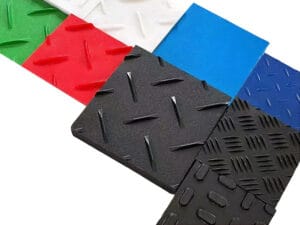

Construction ground mats help create temporary access, reduce rutting and protect surfaces, but they work best when the buyer matches the mat layout to ground condition, vehicle type, route shape and inspection routine. The right choice is not only a material choice; it is a site access plan.
SDYZ Plastic’s confirmed product range includes HDPE Ground Mats, which are HDPE plastic mats used for temporary roadways, construction sites, gardens, events, industrial yards and maintenance access routes. Buyers can also review 4×8 HDPE Ground Protection Mats when a fixed panel format is suitable.
Table of Contents
Table of Contents
What construction ground mats should solve
The job of construction ground mats is to spread contact pressure over a larger area and provide a more predictable running surface. They can help protect grass, soil, finished yards and temporary work areas from direct tire or track damage. They do not make weak ground unlimited, and they do not replace a designed crane mat, outrigger pad or engineered working platform where the load case requires one.
For this article, the useful search intent is selection guidance. Search results for construction ground mats are mostly product pages, buying guides and temporary access explanations. A practical blog should therefore help buyers decide what to ask, not simply repeat that mats are strong or reusable.
Start with ground condition and traffic
Ground condition comes first. A dry, firm, level route for light vehicles is different from wet clay, soft landscaped soil, an uneven slope or repeated heavy-equipment traffic. Buyers should identify the weakest part of the route, not only the average surface. One soft turning point can control the whole mat plan.
For construction projects, the UK HSE notes that temporary works can include haul roads and working platforms for plant, and that temporary works need planning and management. That does not mean every mat route needs the same design process, but it reinforces the basic rule: access routes should be planned for foreseeable loads rather than improvised after site damage appears. See the HSE overview of temporary works for the broader safety context.
Choose size, thickness, texture and connectors together
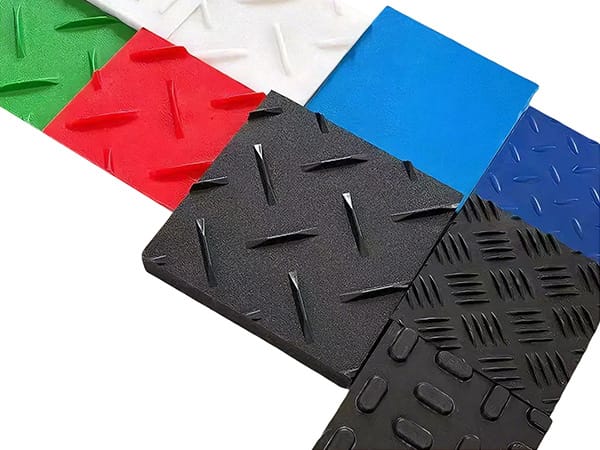
A construction ground mats specification should not choose thickness alone. Mat length and width affect coverage and handling. Thickness affects stiffness and wear allowance. Texture affects traction. Connector holes affect route continuity. Color and marking can support site control or batch identification.
| Decision point | What to check | Why it matters |
|---|---|---|
| Ground condition | Firmness, drainage, slope, soft spots | Controls whether mats are suitable and how many are needed |
| Traffic type | Pedestrian, light vehicle, forklift, truck, tracked equipment | Different traffic creates different wear and turning stress |
| Mat size | Panel length, width and route width | Affects coverage, turning areas and transport |
| Thickness | Expected load, reuse cycle and support condition | Too thin may deform; too thick may be harder to handle |
| Texture | Single or double sided traction surface | Affects grip and cleaning |
| Connectors | Hole pattern and connector type | Helps keep panels aligned during use |
Plan the route before ordering mats
Route planning should happen before the purchase order. Mark entry and exit points, turning areas, pedestrian crossings, storage points and any area where equipment stops under load. Mats used only for straight access may need a different layout from mats used under repeated turning or loading.
If the route includes stabilizers, outriggers or concentrated point loads, review UHMWPE outrigger pads separately. Ground protection mats support access and surface protection; outrigger pads are selected around concentrated reaction loads and should not be treated as the same purchase.
Compare HDPE mats with common alternatives
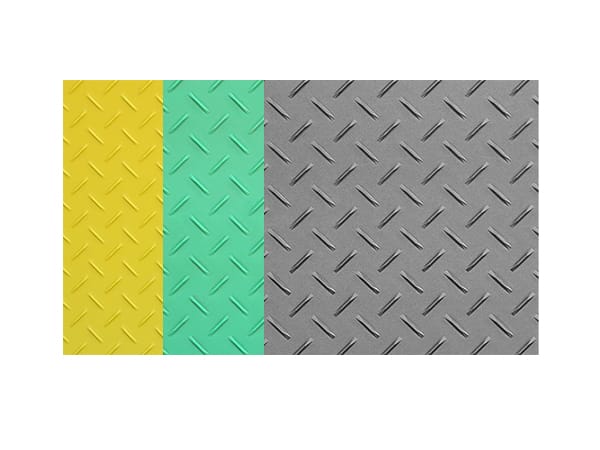
Buyers often compare HDPE mats with plywood, steel plates or timber mats. Plywood can be easy to source for very light, short use, but it may absorb moisture and deteriorate. Steel plates can handle certain heavy-duty needs but are harder to move and may create slip, edge and handling concerns. HDPE mats are often considered when reuse, lower handling weight, moisture resistance and textured access are important.
The best option depends on ground condition, traffic, handling equipment, storage and reuse frequency. A one-day pedestrian event route is not the same as a repeated industrial maintenance path. Buyers should write the actual use case into the RFQ rather than asking for a generic best mat.
Inspection, cleaning and reuse
Construction ground mats should be inspected before, during and after use. Check cracked edges, deep gouges, connector damage, excessive deformation, missing markings and contamination that could reduce traction. Reusable mats should be cleaned before storage if mud, grit, chemicals or sharp debris could damage the surface or create handling issues on the next job.
- Check route condition before installation
- Keep mat edges supported where possible
- Use connectors where route continuity matters
- Inspect turning areas more often than straight routes
- Clean and stack mats so the next project starts with known condition
Inspection should focus on the parts of the route that see the most stress. Straight travel areas often wear differently from turning zones, loading points and locations where vehicles stop and restart. If rutting appears beside the mat edge, the route width, connector layout or traffic control plan may need adjustment.
Cleaning and storage affect the next project. Mud left on a textured face can reduce traction, and sharp aggregate trapped between stacked mats can mark the surface. A simple return checklist helps the buyer separate reusable mats from panels that need repair, replacement or closer review before redeployment.
RFQ details buyers should provide
An effective RFQ for construction ground mats should include site use, route dimensions, equipment type, approximate wheel or track contact condition, ground description, required mat size, expected reuse, connector requirement, color preference, quantity and delivery location. Photos of the route help a supplier understand surface condition, entry limits and storage space.
SDYZ Plastic can discuss HDPE mat size, texture, color, connector layout and transport method based on the HDPE Ground Mats product path. For buyers still comparing sizes, the existing HDPE ground protection mats guide can help organize the early selection questions before a formal quotation.
Buyers should also explain whether the mats will be moved daily, left in place for the full project or reused across multiple sites. Handling frequency changes the importance of panel weight, lifting method, stack height, truck loading plan and edge durability.
When to involve an engineer or site safety reviewer
Use engineering or site safety review when the route supports heavy plant, repeated loaded turning, soft or sloped ground, underground services, crane activity, public access or temporary works that could affect safety. A supplier can advise on product manufacturability and mat options, but ground bearing assessment and site safety responsibilities belong to the project team.
This distinction protects both buyer and supplier. The mat quotation should state what is being supplied; the site plan should state how the route will be used, inspected and controlled.
If the route crosses utilities, drainage structures, tree roots, landscaped areas or public-facing paths, the buyer should confirm whether additional protection, signage, barriers or supervision is required. Mats can be part of the control plan, but they should not be the only control when the site condition carries wider risk.
A practical buyer will also ask how the mats will arrive and leave the site. Pallet size, stack height, lifting equipment, truck access and storage space can affect whether the chosen panel size is realistic. A technically suitable mat can still create problems if the site cannot unload, move or store it safely.
For repeat users, keep a simple mat history record. Note the project, approximate traffic type, visible damage, cleaning status and any panels removed from service. This makes future procurement more accurate because the buyer can compare expected reuse with actual field condition.
Conclusion
Construction ground mats should be bought as part of a route plan, not as isolated panels. Define ground condition, traffic, layout, connectors, inspection and reuse expectations before ordering. That produces a clearer quotation and a more reliable temporary access setup.
FAQ
Do construction ground mats work on soft ground?
Construction ground mats can improve access and reduce rutting, but suitability depends on soil firmness, drainage, slope, load and route design. Very weak ground may need engineering review.
How thick should ground protection mats be?
There is no universal thickness. The right thickness depends on vehicle type, ground support, reuse frequency, turning areas and handling limits.
Are HDPE mats better than plywood?
HDPE mats are often better for reuse, moisture resistance and textured access. Plywood may suit light, short-term use but can deteriorate in wet conditions.
Can ground mats replace outrigger pads?
No. Ground mats support access routes and surface protection. Outrigger pads are selected for concentrated stabilizer loads and should be specified separately.
What should buyers send before quotation?
Send route dimensions, ground photos, equipment type, required mat size, thickness preference, connector needs, quantity and reuse expectations.