



Description
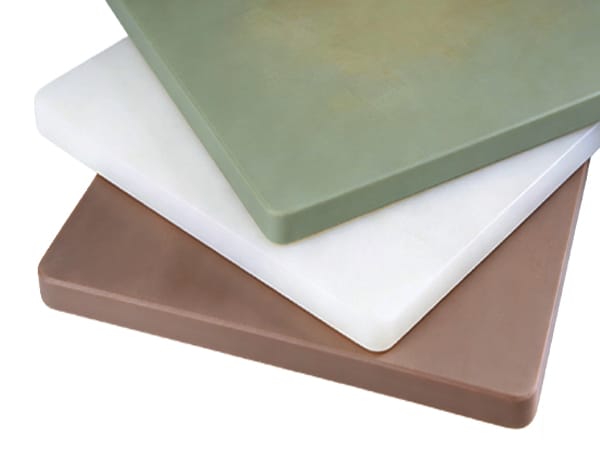
An HDPE chopping board is a finished cutting or preparation surface made from high-density polyethylene. A reliable purchase specification should define the board’s actual working size, thickness, surface, edge profile, handles or holes, color, cleaning method, and required food-contact documentation. Ordering only by the words “HDPE board” leaves important hygiene and fit questions unanswered.
This product page is for custom boards used in commercial kitchens, food-preparation areas, processing workstations, and replacement installations. It does not assume that every HDPE grade is automatically approved for every food, temperature, or jurisdiction. The exact material and supporting documents must be agreed for the intended market.
What should buyers specify first?
Start with the finished board geometry and how it is supported. A loose countertop board, a board recessed into a stainless-steel table, and a panel fixed to food-processing equipment have different fit and handling requirements. State whether the board rests on a full surface, bridges an opening, slides into guides, or bolts to a frame.
Dimensions should be provided in millimetres or inches and identified as finished dimensions. For a replacement, measure the equipment opening as well as the old board. Old polyethylene can wear, bow, or change shape, so copying only the removed component may reproduce an incorrect fit.
How do size, thickness, and support work together?
Board thickness cannot be selected from length and width alone. A fully supported board may behave differently from a board spanning a sink, trolley, frame, or machine opening. Expected cutting force, concentrated loads, handling frequency, and desired board weight also affect the practical choice.
If a board is too flexible for its support spacing, it may feel unstable in use. If it is made unnecessarily thick, it may become difficult for staff to lift and clean. Provide the support layout and describe whether one person must remove the board routinely. The supplier can then review the requested thickness against the manufacturing drawing, while the buyer remains responsible for validating the complete workstation.
Surface finish, knife marks, and cleaning
A new cutting surface should be smooth enough to clean under the site’s sanitation procedure and appropriate for the intended cutting task. During service, knife marks are expected to develop. Deep scoring, cracks, embedded residues, warping, and damaged edges should be addressed under the user’s inspection and replacement program.
Before ordering, tell the supplier how the board will be washed, the cleaning chemicals used, the typical cleaning temperature, and whether the board enters mechanical washing equipment. Compatibility cannot be judged from the polymer name alone because exposure concentration, duration, temperature, additives, and mechanical condition all matter.

Food-contact compliance must match the exact grade
For the United States, 21 CFR 177.1520 describes olefin polymers that may be used in food-contact articles subject to its specifications and conditions. That rule does not mean every polyethylene sheet, pigment, additive package, or finished board automatically complies. The purchasing file should identify the exact resin or sheet grade and retain the supplier’s applicable declaration or test documentation.
For sales into other markets, provide the destination country and the regulatory requirement at inquiry stage. Also state the intended food type and service temperature. If the board will contact hot food, oils, acidic products, or cleaning chemicals, those conditions need to be included in the compliance review rather than inferred after delivery.
Color coding and identification
Color coding can help a facility separate work areas, ingredients, or processes, but the facility should define its own color plan. A color name such as red, blue, or green is not a complete visual specification when repeat batches need to match. Supply a color reference, approved sample, or previous order record when appearance consistency is important.
Pigments and additives must be considered within the required food-contact documentation. Do not assume that a natural or white board and a colored board have identical supporting declarations. If boards are assigned to different stations, position labels, engraved identifiers, or controlled markings may also be discussed from a drawing.
Edge profiles, corners, and handling features
Custom machining can make a board easier to fit and handle. Common drawing features include rounded corners, radiused or chamfered edges, finger slots, handle openings, drainage grooves, location holes, and cut-outs around equipment. Each feature should be dimensioned from a clear datum so it can be reproduced on later orders.
- Rounded corners: define the radius and confirm whether it is needed on all four corners.
- Edge treatment: identify square, chamfered, or radiused edges and the working face.
- Handle opening: specify length, width, end radius, position, and comfortable edge treatment.
- Equipment cut-outs: provide a drawing or template with datums rather than an approximate sketch.
- Identification: state any engraving, numbering, or orientation marking required for site control.
HDPE chopping board purchasing checklist
| Specification | Details to provide | Purchasing reason |
|---|---|---|
| Finished dimensions | Length, width, thickness, tolerances, and units | Controls fit, handling, and repeatability |
| Installation | Loose board, recessed top, slide-in panel, or fixed component | Defines supports and interface dimensions |
| Surface | Required finish, working face, and cleaning procedure | Connects production finish to sanitation practice |
| Edges and corners | Corner radius, chamfer, edge radius, grooves, and cut-outs | Prevents ambiguous machining instructions |
| Handles and holes | Shape, size, centre position, and edge treatment | Supports safe handling and equipment fit |
| Color | Color name plus sample or reference where matching matters | Supports site coding and repeat orders |
| Compliance file | Destination market, food type, temperature, and required declaration | Ensures documentation is tied to the exact grade |
| Quantity and packing | Order quantity, labels, individual protection, and batch identification | Keeps similar boards separated during delivery |
Inspection, maintenance, and replacement planning
Receiving inspection should compare the delivered board with the approved drawing and purchase specification. Check finished dimensions, color, edge details, handle positions, surface condition, labels, and the agreed material documents. Store boards flat or in a rack designed to prevent damage and contamination before use.
The operating site should define when a board is cleaned, resurfaced, rotated, or replaced. Decisions should be based on actual condition and the facility’s hygiene controls, not on a universal service-life claim. Keeping the drawing revision and material declaration with the asset record makes later replacement orders more consistent.
Related HDPE supply options
For raw stock or projects where the buyer will complete fabrication, review the available HDPE plastic sheets. For non-cutting components that need profiles, holes, pockets, or other machining, use the CNC milling plastic parts page. A chopping-board inquiry should remain focused on the finished food-preparation surface and its documentation.
Prepare a clear quotation request
Send a drawing or finished dimensions, support arrangement, thickness, color, edge and handle details, cleaning conditions, destination market, food-contact documentation requirement, quantity, and packing instructions. For replacements, include photos of the old board and workstation plus any known fit problem. This information allows SDYZ Plastic to review the exact board rather than quoting a generic sheet blank.
Frequently asked questions
Is every HDPE chopping board suitable for food contact?
No. Suitability depends on the exact resin, colorants, additives, manufacturing controls, intended food, temperature, and target-market rules. Request supporting documentation for the specific grade and finished article.
What thickness should an HDPE chopping board have?
Thickness should be selected from board dimensions, support conditions, expected cutting duty, handling weight, and whether the board fits an existing table or machine. There is no single correct thickness for every installation.
Can handle holes and rounded corners be added?
Yes, these features can be machined when their size and position are defined on the drawing. Edge distance and finished-board strength should be reviewed.
Can an HDPE chopping board be resurfaced?
Resurfacing may be possible if enough material remains and the board is not cracked, badly warped, or otherwise unsuitable for continued service. The user should follow the site’s hygiene and replacement procedure.
What is needed to replace an existing chopping board?
Provide finished length, width, thickness, corner shape, edge profile, handle details, surface requirement, color, photographs, and any fit-critical dimensions.