

Description
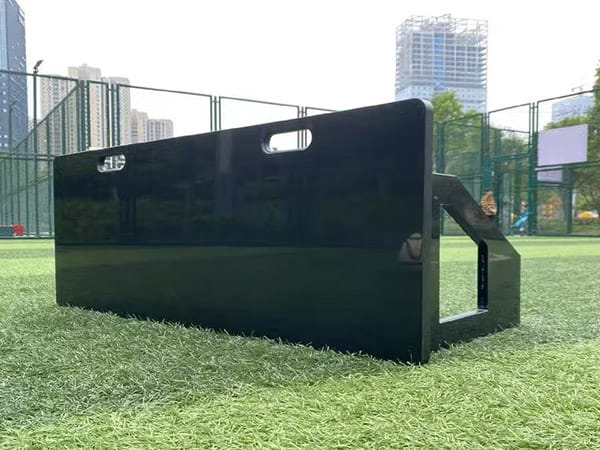
A football training rebound board gives players a repeatable surface for passing, first-touch, receiving, and ball-return drills. For a useful custom panel, the buyer must define more than length and width: rebound behavior depends on the plastic panel, unsupported span, frame stiffness, fixing pattern, working angle, and training environment.
This page is intended for clubs, training-equipment builders, sports facilities, and distributors that need a plastic rebound panel or a replacement panel for an existing assembly. The panel can be reviewed from a drawing, a frame layout, or measured details from the unit being replaced.
How does a football training rebound board work?
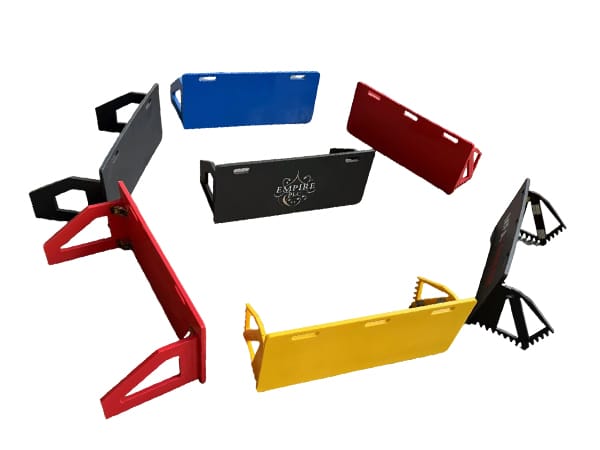
The board redirects the ball toward the player after impact, allowing one person to repeat passes and receiving movements without a second passer. A vertical face generally returns the ball along a low path, while an angled face can change the height and direction of the return. The exact response is created by the complete board assembly, not by a material name alone.
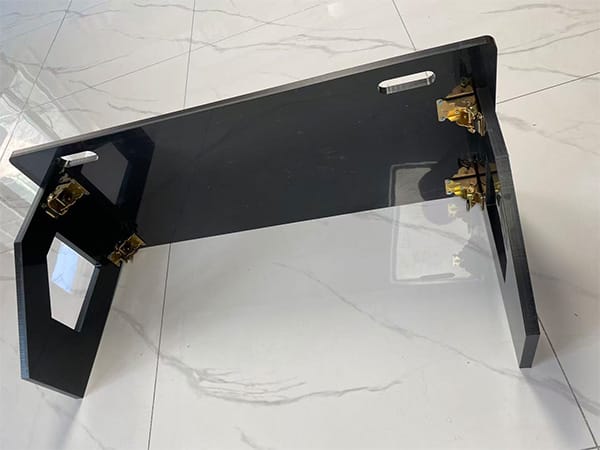
A thin panel across a wide unsupported opening can flex more than the same panel on closely spaced supports. A rigid frame, additional ribs, or a thicker panel may change the sound and return response. For that reason, buyers replacing an existing panel should retain the original support spacing and hole pattern unless the whole assembly is being redesigned.
Choose the training format before specifying the panel
The installation format determines how the panel is loaded and handled. A portable rebounder needs a stable base, manageable dimensions, and safe lifting or carrying points. A wall-mounted panel needs an attachment layout that transfers repeated ball impact into the supporting structure. A board integrated into a training cage or fixed frame should match the frame opening and allow access to fasteners for maintenance.
- Passing and first-touch drills: prioritize a consistent, unobstructed face and a predictable working angle.
- Portable coaching equipment: confirm overall weight, transport position, feet, handles, and storage space.
- Fixed training stations: define wall or frame supports, edge clearance, and service access around the panel.
- Replacement panels: provide the existing hole centres, support spacing, edge profile, and photographs from both sides.
What controls rebound consistency?
Consistent rebound begins with a flat impact face and repeatable support conditions. Panel thickness by itself does not predict performance. Two boards made from similar polyethylene can respond differently when their frame stiffness, span, fastener spacing, or inclination changes. Ball pressure, impact speed, and the point of contact also affect what a player experiences during a drill.
For a new design, it is sensible to agree on the intended drill and assembly layout before production. For a replacement, the safest purchasing reference is the previous panel geometry plus the existing frame data. If a particular return angle or impact response is critical, that requirement should be evaluated on a prototype or completed assembly rather than inferred from sheet thickness alone.
Panel details that belong on the drawing
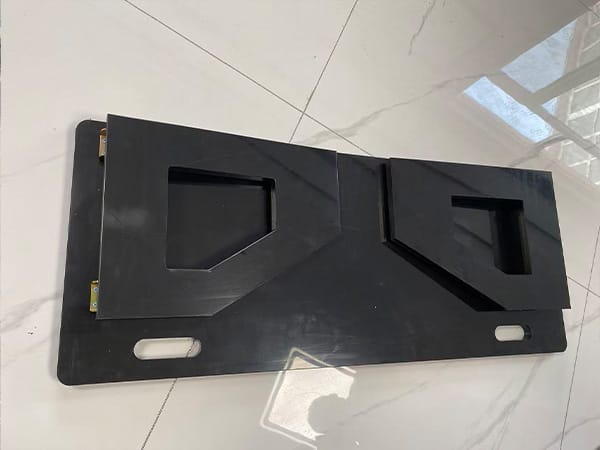
A production drawing should show the finished panel, not only the nominal sheet size. Include overall length and height, thickness, corner radii, edge treatment, hole diameter, countersink or counterbore details, and the centre-to-centre position of every fixing point. Identify the front impact face so the part cannot be reversed during machining or installation.
The drawing should also separate critical dimensions from general dimensions. The frame interface and fixing pattern usually deserve tighter control than a non-contact outside edge. If graphics, scoring zones, or markings are required, provide their position and artwork as a separate controlled file and confirm the required marking method.
Material and outdoor-service questions
Polyethylene panels are commonly considered for sports equipment because they can be machined and do not rely on a painted steel impact face. However, the appropriate polyethylene grade must be confirmed against the actual installation. Tell the supplier whether the board will stay indoors, remain outdoors, or move between storage and the field. Temperature range, sunlight exposure, moisture, cleaning products, and expected service period all belong in the material review.
Color is a design and visibility decision, but color alone does not prove weathering performance. Do not assume that every sheet grade has the same ultraviolet resistance or low-temperature behavior. Where long-term outdoor use is required, request confirmation for the proposed material grade and decide how the frame and fasteners will be protected as part of the complete equipment design.
Football rebound board specification checklist
| Decision point | What the buyer should define | Why it matters |
|---|---|---|
| Training purpose | Passing, first touch, receiving, target practice, or another defined drill | Establishes the required face, angle, and return path |
| Installation | Portable, wall-mounted, fixed frame, or replacement panel | Changes support, handling, and fixing requirements |
| Panel geometry | Finished length, height, thickness, corners, and edge treatment | Defines the machined component rather than raw sheet stock |
| Support layout | Frame opening, rib spacing, and unsupported span | Strongly influences panel deflection and rebound response |
| Fixings | Hole size, hole centres, recesses, fastener head, and edge distance | Prevents mismatch with the frame and avoids proud fasteners |
| Environment | Indoor or outdoor use, temperature, sunlight, moisture, and storage | Guides material-grade and maintenance review |
| Acceptance | Drawing revision, flatness or fit checks, visual finish, and quantity | Creates a clear inspection basis for repeat orders |
Safety and installation review
A rebound panel is one component of sports equipment, so the equipment designer or installer must review the complete system. Exposed edges should be addressed in the design, fastener heads should not create unintended contact points, and the frame should resist movement during the intended drills. Portable units need a stable operating position; fixed units need suitable anchoring to the supporting structure.
The board should be inspected after installation and during use for loose fasteners, damaged supports, sharp edges, cracking, or permanent distortion. The inspection interval depends on usage intensity and environment. The supplier can manufacture a panel to the agreed drawing, but site-specific anchoring and equipment safety remain part of the complete training-system assessment.
Ordering a replacement rebound panel
When the original drawing is unavailable, measure the old panel only after confirming which dimensions come from the frame. Photograph the front, rear, corners, fixing points, and any area showing repeated impact or distortion. Record hole centres from common datums instead of measuring each gap independently; this makes the replacement pattern easier to verify.
If the old panel no longer sits flat, do not copy its distorted shape. Supply the frame opening and support positions so the intended geometry can be reconstructed. Mark any design change clearly, including thicker material, revised hole positions, larger corner radii, or a different working angle.
Related material and custom-part options
Buyers still deciding on the base material can review the site’s HDPE plastic sheet options. Projects that include brackets, spacers, guides, or other machined items can be routed through the engineering plastic components page. These links serve different purchasing stages and should not replace the rebound-board drawing.
What to send with your inquiry
Send the finished panel drawing or measured replacement details, the intended drill, installation format, frame support layout, indoor or outdoor conditions, preferred color, quantity, and required delivery form. For an existing unit, add photographs of the frame and old panel. SDYZ Plastic can then review whether the request is for a machined panel only or requires additional custom plastic components.
Frequently asked questions
What determines the rebound from a football training board?
Rebound depends on the panel material, thickness, unsupported span, frame stiffness, fixing method, board angle, and ball impact. Evaluate the complete assembly rather than the plastic panel alone.
Can a football rebound board be used outdoors?
Outdoor suitability should be confirmed from the selected material, color, support frame, fasteners, expected temperature range, exposure period, and storage plan.
Should the rebound board be portable or fixed?
Portable boards suit changing drill layouts. Fixed or wall-mounted systems suit repeated use in one location. Stability and safe anchoring must be reviewed for either format.
What drawing information is needed for a custom board?
Provide overall dimensions, panel thickness, hole positions, edge details, frame interface, working angle, quantity, and any critical tolerances.
Can the panel be supplied for an existing frame?
Yes, subject to drawing review. Provide the frame opening, fixing pattern, support spacing, existing panel thickness, and photographs of the installed unit.