



Table of Contents
Introduction
A PP PE water tank is commonly selected when industrial storage needs corrosion resistance, low weight, and custom fabrication flexibility. The right tank depends on the stored liquid, temperature, installation location, fittings, support frame, and cleaning requirements.
This guide helps engineers and purchasing teams prepare a clear specification for a PP/PE industrial plastic water tank. It explains when PP or PE may be suitable and what information should be confirmed before production.
What This Material or Part Does
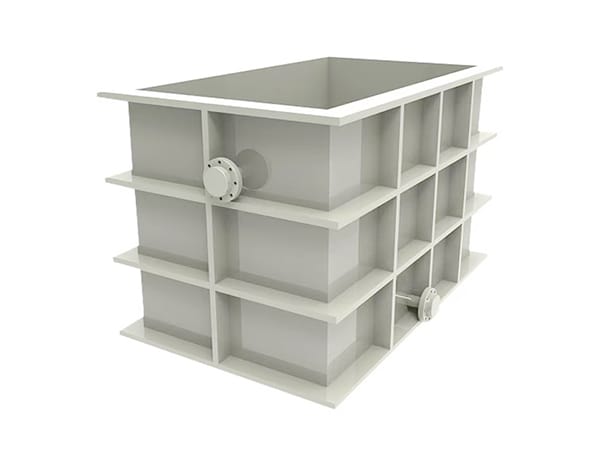
A PP PE water tank is a plastic storage tank fabricated from polypropylene or polyethylene sheet. It may be used for water, process liquids, treatment systems, chemical support equipment, or industrial circulation systems. The exact material should be chosen for the liquid and operating condition.
Both PP and PE belong to the polyolefin family, but they do not behave exactly the same. General background on polyethylene and polypropylene can help buyers understand why material selection matters.
Where It Works Best
A PP PE water tank is used in water treatment, electroplating support systems, chemical workshops, environmental equipment, agriculture, and process water storage. It is also useful where a tank needs custom dimensions or fittings.
If the project starts from sheet fabrication rather than a finished tank, related material pages such as PP Sheet and HDPE sheet products can help compare fabrication options.
Key Selection Factors
Stored liquid
The stored liquid is the first selection factor. Water, salt solution, mild chemicals, and process liquids may require different materials. A PP PE water tank should not be ordered before compatibility is checked.
Temperature and location
Temperature affects stiffness, expansion, and long-term performance. Outdoor tanks may also need review for UV exposure, foundation quality, wind, and installation stability.
Fittings and support
Nozzles, drains, level gauges, reinforcement, and support frames should be included in the tank design. A PP PE water tank wall should not be treated like a simple flat sheet once fittings are added.

Technical Comparison Table
| Selection point | What to check | Practical impact |
|---|---|---|
| Material grade | PP or PE selected by liquid and temperature | Improves compatibility and service reliability |
| Dimensions | Capacity, dimensions, wall thickness, and reinforcement | Controls shape stability and usable volume |
| Operating environment | Indoor, outdoor, chemical, temperature, and cleaning exposure | Prevents unsuitable tank placement |
| Processing method | Sheet welding, fittings, inspection, and leak testing | Defines the final PP PE water tank quality |
Installation and Maintenance Notes
Inspect weld seams, fittings, supports, and bottom corners regularly. A PP PE water tank should sit on a flat, strong foundation that supports the full bottom area.
Avoid adding heavy side loads from pipes or valves without reinforcement. Flexible connections can reduce stress on fittings, especially when pumps or vibration are present.
Common Buying Mistakes
- Ordering by volume only and ignoring liquid compatibility.
- Adding fittings after fabrication without reinforcement planning.
- Placing the tank on an uneven foundation.
- Ignoring temperature and outdoor exposure.
What to Send Before Quotation
A tank quotation should include more than capacity. The supplier needs to understand the stored liquid, layout, and installation method.
- Tank capacity, length, width, height, and wall thickness.
- Stored liquid, concentration, and temperature.
- Fitting size, position, flange type, and drain requirements.
- Indoor or outdoor location and support foundation.
- Drawing, color, inspection, and packing requirements.
FAQ
Is a PP PE water tank suitable for chemicals?
A PP PE water tank can be suitable for some chemicals, but compatibility depends on the specific liquid, concentration, temperature, and tank design.
Can the tank size be customized?
Yes. Dimensions, fittings, reinforcement, and color can usually customize a PP PE water tank.
Which is better, PP or PE?
Neither is always better. PP and PE have different chemical, temperature, and fabrication characteristics, so the application should decide.
Conclusion
A PP PE water tank should be specified around the stored liquid, temperature, fittings, support, and inspection needs. Clear details at the RFQ stage reduce fabrication risk.
Site Installation Notes
Before installation, confirm that the foundation is level, clean, and strong enough for the filled tank. Plastic vessels can perform poorly if they are supported only at a few points or if sharp debris sits under the base. Pipe connections should line up naturally instead of pulling the wall into position.
Operators should also know the intended use limits. A storage vessel designed for one liquid should not be switched to another liquid without compatibility review. Labeling the service condition near the installation area can prevent accidental misuse during later maintenance or process changes.
For repeat purchasing, keep the approved PP PE water tank drawing with the site equipment records. If another PP PE water tank is ordered later, the team can confirm fittings, wall thickness, reinforcement, and installation notes without relying on memory or photos alone.