

Table of Contents
Introduction
A PA6 nylon sheet is often chosen for machined wear parts because it offers useful strength, toughness, and abrasion resistance. It can be made into bushings, pads, rollers, gears, spacers, and machine components, but the design must account for moisture absorption and dimensional change.
This guide helps engineers and buyers specify PA6 nylon sheet for custom parts. It focuses on machining, tolerance, working environment, and practical RFQ details.

What This Material or Part Does
A PA6 nylon sheet is a polyamide sheet used for machining and fabrication. It is different from polyethylene sheets because nylon generally offers higher strength and stiffness, while also absorbing more moisture. That combination makes it useful but requires careful design.
For a general material background, nylon is a family of synthetic polymers used in fibers and engineering plastics. In sheet form, PA6 nylon sheet is often converted into wear-resistant machine parts.
Where It Works Best
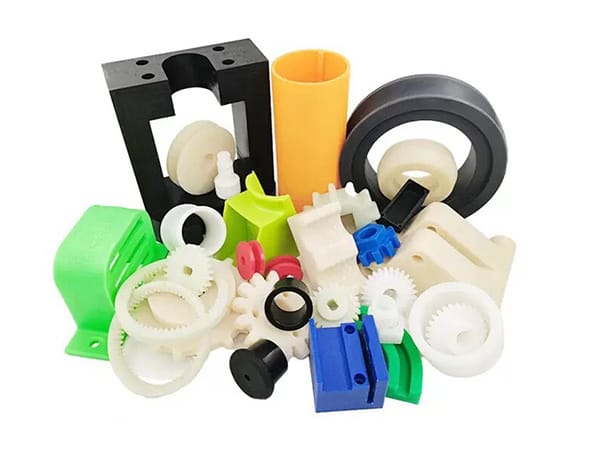
PA6 nylon sheet works well for bushings, slide pads, rollers, guide blocks, gears, fixtures, and support components. It is often selected in machinery where metal parts are too noisy, too heavy, or likely to damage mating surfaces.
When a part requires tight profiles, slots, counterbores, or repeated batches, the sheet can be processed through CNC milling plastic parts. Good drawings help the supplier control tolerance and reduce machining waste.
Key Selection Factors
Moisture absorption
PA6 nylon sheet absorbs moisture, which can change dimensions and mechanical behavior. For precision parts, the working environment and tolerance expectations should be discussed before machining.
Load and wear
Nylon can handle many wear applications, but load, speed, lubrication, and mating material determine performance. A PA6 nylon sheet part should be designed with enough contact area and support.
Machining tolerance
Tight tolerances are possible in many cases, but plastic parts are not metal parts. PA6 nylon sheet wall thickness, heat during machining, and post-machining movement should be considered.
Technical Comparison Table
| Selection point | What to check | Practical impact |
|---|---|---|
| Material grade | PA6 nylon grade suitable for machining | Balances strength, wear, and toughness |
| Dimensions | Sheet thickness, part drawing, and tolerance | Controls machining accuracy and finished fit |
| Operating environment | Humidity, load, speed, temperature, and lubrication | Predicts dimensional change and wear behavior |
| Processing method | CNC milling, turning, drilling, and deburring | Defines how the PA6 nylon sheet becomes the final part |
Installation and Maintenance Notes
Inspect machined nylon parts for wear grooves, cracking, swelling, and looseness at mounting holes. If the part works as a bearing or guide, check both the nylon and the mating surface.
Lubrication should be chosen for the material and the machine. Some applications run dry, while others need compatible grease or oil to control heat and wear.
Common Buying Mistakes
- Ignoring moisture absorption in precision assemblies.
- Copying a metal part without adjusting wall thickness or clearance.
- Choosing PA6 nylon sheet without checking load and speed.
- Requesting unrealistic tolerances for a flexible plastic part.
What to Send Before Quotation
For machined nylon parts, send a drawing whenever possible. If only a sample is available, include the operating condition and the reason the old part failed.
- Part drawing, material grade, and quantity.
- Sheet thickness or finished part dimensions.
- Tolerance, surface finish, holes, and threads.
- Load, speed, humidity, temperature, and lubrication.
- Current problem: wear, noise, breakage, swelling, or fit issue.
FAQ
Is PA6 nylon sheet good for wear parts?
Yes, PA6 nylon sheet is commonly used for many wear parts, but performance depends on load, speed, moisture, and mating material.
Can PA6 nylon sheet be CNC machined?
Yes. PA6 nylon sheet can be milled, turned, drilled, and shaped into custom parts with suitable tooling and realistic tolerances.
Does nylon absorb water?
Yes. PA6 nylon absorbs moisture, so dimensional change should be considered in humid or wet environments.
Conclusion
A PA6 nylon sheet can be an excellent starting material for custom machine parts when the design accounts for moisture, load, tolerance, and machining method.
Machining Planning Notes
For precision components, avoid leaving thin unsupported walls unless the function requires them. More balanced wall thickness can improve machining stability and reduce movement after the part is released from the fixture. Large flat parts may also need stress-relief planning or a practical flatness tolerance.
If the component replaces a metal part, check clearance and contact pressure before copying the drawing. Engineering plastics often need different edge radii, larger bearing areas, or adjusted fits. A small design change can make the part easier to machine and more reliable in service.
For repeat machined parts, keep the approved sample and revision drawing together so future batches match the original functional fit.
Keep moisture exposure notes with the drawing for future repeat orders and fit reviews.