
Borated polyethylene panel is useful when a project needs a machinable polyethylene-based shielding component, but it should not be selected as a generic plastic sheet. The buyer first needs to confirm the radiation type, installation layout, required documentation and the dimensions of the finished part.
For SDYZ Plastic, the closest confirmed product path is Anti-radiation Borated Polyethylene Sheets. The page identifies borated polyethylene for shielding panels, equipment liners, custom blocks, laboratory installations and radiation protection assemblies, with custom size, thickness, color, machining, holes, slots and edge treatment available for drawing-based production.
Table of Contents
Table of Contents
What borated polyethylene panel is expected to solve
The main job of borated polyethylene panel is to become a repeatable shielding panel, liner, block or machined part inside a controlled project. It is not a substitute for a radiation protection design, and it should not be described as suitable for every radiation source. Procurement teams usually need it when the design already calls for a boron-loaded polyethylene material or when a technical reviewer is comparing hydrogen-rich plastics with boron-containing shielding materials.
Search results around this topic are mainly product pages and technical explainers. That means the best blog angle is not a broad category pitch. Buyers need help deciding what information belongs in a specification and what must be confirmed by a radiation safety professional before ordering.
Confirm the radiation problem before selecting material
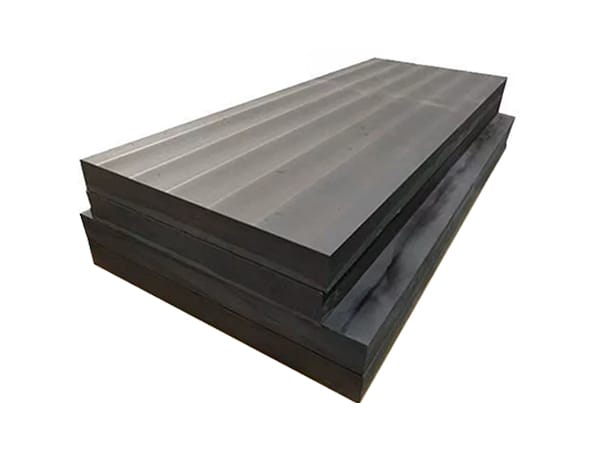
The first question is whether the project involves neutrons, gamma radiation, mixed radiation or another condition. Public technical references on neutron radiation explain why hydrogen-rich materials such as polyethylene are relevant to neutron moderation, while boron-containing materials are used for neutron absorption. That background supports the material logic, but it does not replace project-specific shielding calculations.
A buyer should ask the designer or site safety team to define the source, energy range, exposure condition, allowed space, surrounding materials and inspection requirements. If those details are missing, a supplier can discuss manufacturing feasibility, but the supplier should not be expected to certify the complete shielding design from a short product name alone.
Key specification details buyers should define
A useful borated polyethylene panel request should describe the material and the final part. The material side covers boron content, base resin, color and documentation. The part side covers sheet size, thickness, hole pattern, edge finish, flatness expectation, packing method and whether the buyer needs cut blanks or finished CNC machined parts.
| Specification point | Why it matters | What to send |
|---|---|---|
| Radiation condition | Prevents using the wrong shielding material | Radiation type, source description and design note |
| Boron content | Affects neutron absorption assumptions | Target content or drawing requirement |
| Thickness | Controls available shielding depth and stiffness | Required thickness and tolerance expectation |
| Panel layout | Avoids gaps, wrong joints and field cutting | Layout sketch, panel count and joint details |
| Machining | Determines production route | Hole pattern, slots, countersinks and edge detail |
| Documentation | Supports receiving inspection | Material description, batch record or agreed test scope |
How boron content, thickness and layout work together
Boron content, thickness and layout should be treated together. A high boron content does not automatically solve a poor layout, and a thick panel does not help if joints, holes or unsupported edges create installation problems. Buyers should avoid comparing quotations only by sheet name because two offers may use different base materials, dimensions and documentation scopes.
For projects that mention borated UHMWPE, the buyer should also clarify whether UHMWPE wear, impact and machining behavior are part of the reason for the material choice. When the sheet is only used as a static shielding layer, the project may have different priorities from a machined block that also sees contact, movement or handling during maintenance.
Machining, holes and panel joints
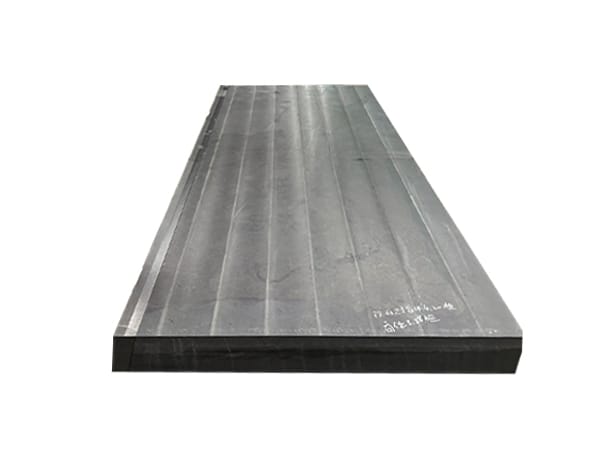
Borated polyethylene panel is often ordered as a machined component rather than a plain sheet. Holes, slots, recesses and edge treatment need to be shown on a drawing. If several panels form a larger assembly, joint width, overlap method, fixing position and orientation marks should be reviewed before production.
SDYZ Plastic also lists CNC milling plastic parts, which is relevant when a shielding sheet must become a finished component. The buyer should separate material requirements from machining requirements so that the quotation does not miss countersinks, labeling, packing order or inspection points.
Documents to request before production
Documentation should match the risk of the project. For simple non-critical prototypes, a material description and dimensional inspection may be enough. For regulated or safety-related work, the purchasing team should agree in advance what documents are required, who reviews them and whether the supplier must mark each panel for traceability.
- Material name and agreed boron content
- Batch or production reference where available
- Drawing revision used for production
- Dimensional inspection scope
- Packing list that matches panel marks
- Any agreed material certificate or test report scope
Receiving inspection should be planned before the shipment leaves the factory. Buyers should decide which dimensions are functional, which surfaces are visual, and which markings are needed for installation. If the panels will be installed in sequence, the packing order and panel labels can prevent unnecessary handling on site.
For repeat orders, revision control is especially important. Keep one approved drawing, one material description and one agreed inspection scope. If the site later changes a hole pattern or panel split, the revision should be recorded instead of relying on email comments that may not reach production.
Common purchasing mistakes
The most common mistake is treating a shielding material name as a complete specification. A second mistake is asking for a universal performance promise without giving source details or panel geometry. A third mistake is ignoring installation conditions such as unsupported edges, thermal movement, fastener access and maintenance removal.
Buyers should also avoid copying a competitor’s product description into an RFQ. A better request explains the actual project, drawing, dimensions, expected documentation and inspection process. That gives the supplier a fair basis for recommending material form and machining route.
Another practical risk is mixing project responsibilities. The manufacturer can support material form, cutting, machining and packing. The project team or radiation professional should confirm the shielding design, source condition and compliance obligations. Stating that boundary clearly helps avoid unsupported claims in the purchase file.
RFQ checklist for Yunzhan Plastic
To discuss borated polyethylene panel with SDYZ Plastic, send the drawing, required quantity, target boron content, panel thickness, installation layout, hole pattern and documentation requirement. If the design is still open, include the available space, surrounding components and the reason a borated polyethylene material is being considered.
Buyers comparing related options can review 5% Borated UHMW Polyethylene Sheet and the broader Anti-radiation Borated Polyethylene Sheets page before sending an inquiry. The most productive CTA is technical review, not a generic price request: ask the supplier to check whether the required sheet, cut blank or machined part scope is clear enough for quotation.
A strong RFQ also names the expected delivery form. Some projects need full sheets for local cutting, while others need finished parts with chamfers, countersunk holes or orientation marks. Clarifying that scope early prevents a quotation for raw material when the buyer actually needs a ready-to-install kit.
Packaging should also be part of the discussion for finished panels. Heavy sheets, small machined blocks and thin cover pieces may need different protection. If the panel face must remain clean for installation, ask how the parts will be separated, wrapped and identified before shipment.
For a project with several similar panels, a simple installation map can be more valuable than a long email thread. Mark each panel number, drawing revision and intended position so the receiving team can check the shipment quickly and avoid mixing parts during storage.
Conclusion
Borated polyethylene panel should be specified as part of a complete shielding assembly, not as a vague plastic sheet. Define the radiation condition, material requirement, dimensions, machining details and documents before ordering. That approach helps the supplier quote the correct material form and helps the buyer avoid gaps between the design intent and delivered panels.
FAQ
What is borated polyethylene panel used for?
Borated polyethylene panel is used for shielding panels, liners, blocks or machined parts where the design calls for polyethylene-based radiation shielding. Final suitability depends on the radiation type, thickness, layout and project review.
Is borated polyethylene the same as standard PE?
No. Standard PE is not automatically borated. Borated polyethylene includes boron-containing material for neutron absorption, so boron content and documentation should be specified.
Can SDYZ Plastic machine shielding panels?
SDYZ Plastic lists custom machining options such as holes, slots and edge treatment. Buyers should provide drawings and tolerances before quotation.
Does thickness alone determine shielding performance?
No. Thickness matters, but boron content, radiation condition, panel layout, joints and surrounding materials also affect the final design.
What should be included in the RFQ?
Include material requirement, boron content, dimensions, thickness, drawing, quantity, hole pattern, installation notes and document expectations.