

Introduction
Plastic gears can reduce weight, noise, and corrosion risk in many machine assemblies, but they must be specified with care. A gear is not just a round plastic part with teeth. Plastic gears need the right material, tooth form, tolerance, load rating, mating gear, shaft fit, and operating environment.
This guide helps OEM buyers, maintenance teams, and machinery engineers prepare a better RFQ for plastic gears. It focuses on practical questions that affect service life and machining accuracy, especially for custom CNC machining plastic gear projects.
What This Material or Part Does
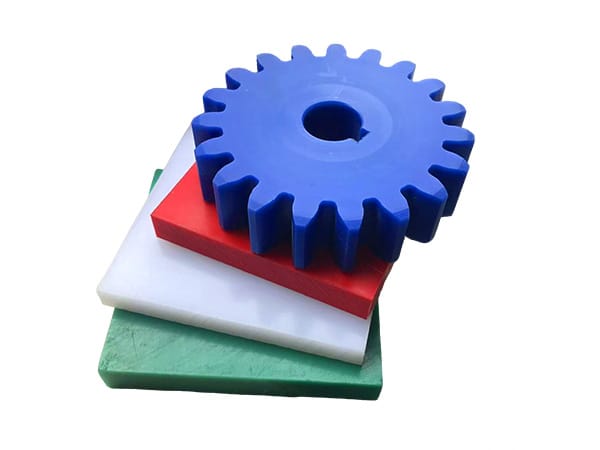
Plastic gears transmit motion and torque between shafts while offering advantages such as lower noise, lower weight, and resistance to corrosion. Depending on the application, plastic gears may be made from nylon, POM, UHMWPE, HDPE, or other engineering plastics.
The correct material depends on load, speed, dimensional stability, friction, and moisture exposure. For a broad explanation of gear function, gear is a useful general reference, but the final design should be based on the actual machine conditions.
Where It Works Best
Plastic gears work best in moderate-load equipment, guide systems, packaging machinery, food processing machines, textile equipment, and custom automation where quiet operation and corrosion resistance matter. They are also useful where a gear is expected to act as a replaceable wear part.
When the design includes housings, spacers, covers, or guide elements, it can be efficient to source plastic gears together with CNC milling plastic parts. This helps keep drawings, tolerances, and material selections consistent.
Key Selection Factors
Load and speed
Plastic gears should be evaluated by torque, speed, duty cycle, and shock load. Plastic gears that run well at low speed may heat or wear quickly at higher speed if the material and tooth geometry are not suitable.
Material and moisture
Some plastics absorb more moisture than others, and that can change dimensions. If plastic gears operate in wet or humid environments, dimensional change must be considered along with wear resistance.
Tolerance and tooth quality
CNC machining can produce accurate plastic gears, but tolerances must be realistic for the material. Overly tight tolerances may raise cost and create inspection disputes without improving machine performance.
Technical Comparison Table
| Selection point | What to check | Practical impact |
|---|---|---|
| Material grade | Nylon, POM, UHMWPE, HDPE, or specified engineering plastic | Balances wear, strength, friction, and dimensional stability |
| Dimensions | Module, tooth count, bore, keyway, width, and tolerance | Ensures the gear meshes and mounts correctly |
| Operating environment | Load, speed, humidity, temperature, and lubrication | Reduces risk of heat, swelling, or premature wear |
| Processing method | CNC turning, milling, hobbing, or combined machining | Controls tooth form and repeatability |
Installation and Maintenance Notes
Inspect plastic gears for tooth wear, cracking at the hub, bore looseness, and unusual noise. A change in sound often appears before visible failure.
Lubrication should match both the plastic material and the mating gear. Some oils or greases may not be suitable for every plastic. General machine safety still applies around rotating components; OSHA?? machine guarding standard is a useful reference: OSHA 1910.212.
Common Buying Mistakes
- Sending only an old sample without working conditions.
- Ignoring the mating gear material and tooth form.
- Specifying metal-level tolerances for a plastic part without reason.
- Forgetting moisture, temperature, and lubrication compatibility.
What to Send Before Quotation
For custom plastic gears, a complete drawing is best. If a drawing is not available, send a sample plus clear machine data so the supplier can judge feasibility.
- Gear type, module or pitch, tooth count, and pressure angle if known.
- Bore size, keyway, hub shape, and mounting details.
- Material preference or current material.
- Speed, load, duty cycle, temperature, and lubrication.
- Quantity, tolerance expectations, and inspection requirements.
FAQ
Are plastic gears strong enough for machinery?
Plastic gears can be strong enough for many moderate-load applications, but load, speed, tooth design, and material must be matched carefully.
Can plastic gears run without lubrication?
Some materials offer low-friction behavior, but lubrication decisions depend on load, speed, noise expectations, and the mating gear.
Should I copy the metal gear design exactly?
Not always. Plastic gears may need different tooth width, hub support, clearance, or material allowance because plastics behave differently from metals.
Conclusion
Plastic gears perform well when the design treats them as engineered machine components. Define load, speed, material, tolerance, and environment before machining to improve fit and service life.
Drawing and Inspection Notes
A gear drawing should identify which dimensions are critical to motion and which dimensions are only for mounting or clearance. Bore fit, tooth profile, face width, hub position, and keyway geometry usually deserve special attention. If the part is being copied from a worn sample, the original tooth shape may already be damaged, so a sample alone may not be enough for accurate reverse engineering.
Inspection should also match the application. A low-speed adjustment wheel may not need the same inspection method as a continuously running transmission part. Clarifying the operating role helps the supplier decide where measurement time matters most and where a practical tolerance is more appropriate than an unnecessarily tight number.
For repeat orders, keep the approved inspection drawing with the machine record. This makes future purchasing faster and helps avoid small undocumented changes that affect fit.
Keep one approved spare for dimensional comparison when the machine is serviced or rebuilt later.