
Table of Contents
Introduction
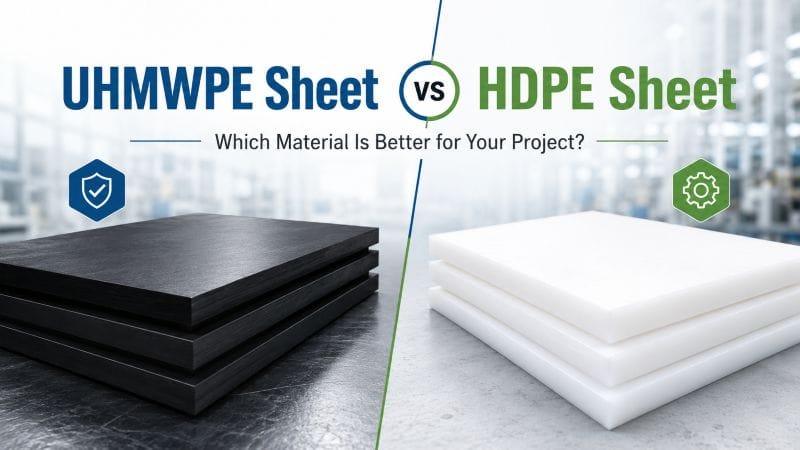
When buyers compare engineering plastic sheets, two materials often appear first: UHMWPE sheet and HDPE sheet.
Both materials are durable, moisture-resistant, and widely used in industrial applications. But they are not the same.
Choosing the wrong material may cause faster wear, poor sliding performance, higher maintenance costs, or unnecessary purchasing expense.
For most buyers, the real question is not:
“Which material is better?”
It should be:
“Which material is better for my application?”
UHMWPE sheet is usually used for high-wear, high-impact, and low-friction applications.
HDPE sheet is often used for general industrial panels, chemical-resistant parts, outdoor components, and custom fabrication.
In this guide, Yunzhan explains the key differences between UHMWPE sheet and HDPE sheet, helping you choose the right material for your project.
What Is UHMWPE Sheet?
UHMWPE stands for Ultra-High Molecular Weight Polyethylene.
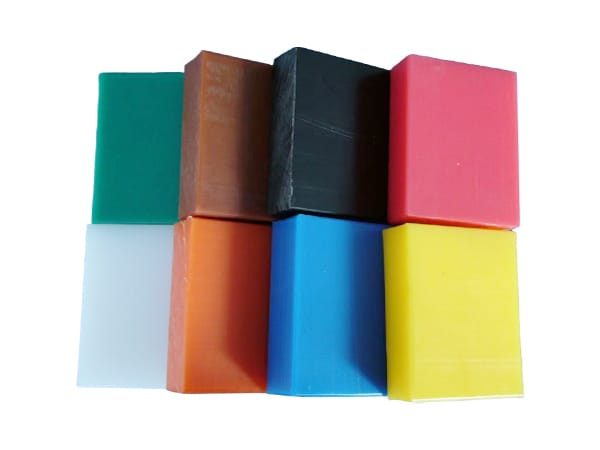
It is a high-performance engineering plastic known for excellent wear resistance, impact resistance, and low-friction performance.
Because of its high molecular weight, UHMWPE performs especially well in demanding industrial environments.
It is often selected when parts need to slide, guide, protect, or resist abrasion.
Common Uses of UHMWPE Sheet
UHMWPE sheet is commonly used for:
- Conveyor wear strips
- Chain guides
- Chute liners
- Hopper liners
- Marine fender facing pads
- Sliding plates
- Machinery wear parts
- Food processing equipment parts
- Mining and bulk material handling components
For applications where metal parts create noise, corrosion, or excessive friction, UHMWPE sheet can be a practical replacement material.
What Is HDPE Sheet?
HDPE stands for High-Density Polyethylene.
It is a strong, versatile, and cost-effective plastic sheet material.
HDPE sheet offers good impact resistance, chemical resistance, moisture resistance, and machinability.
It is widely used in general industrial applications where extreme wear resistance is not the main requirement.

Common Uses of HDPE Sheet
HDPE sheet is commonly used for:
- Chemical tank liners
- Cutting boards
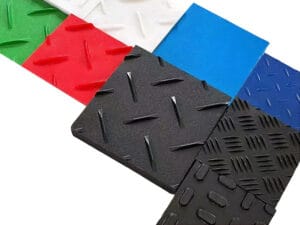
- Ground protection mats
- Outdoor plastic panels
- Water treatment components
- Marine parts
- Agricultural components
- Industrial work surfaces
- Custom fabricated plastic parts
For many projects, HDPE sheet provides a good balance of performance, processing convenience, and cost control.
UHMWPE Sheet vs HDPE Sheet: Quick Comparison
| Comparison Factor | UHMWPE Sheet | HDPE Sheet |
|---|---|---|
| Wear resistance | Excellent | Good |
| Impact resistance | Excellent | Good |
| Friction performance | Very low friction | Moderate to low friction |
| Chemical resistance | Good | Excellent for many chemicals |
| Moisture resistance | Excellent | Excellent |
| Machinability | Good, requires experience | Easy to machine and fabricate |
| Cost level | Usually higher | Usually more economical |
| Best use | High-wear and sliding applications | General industrial and fabrication use |
In simple terms:
Choose UHMWPE sheet when wear resistance and low friction matter most.
Choose HDPE sheet when you need a durable, versatile, and economical plastic sheet for general use.
Key Difference 1: Wear Resistance
Wear resistance is one of the biggest advantages of UHMWPE sheet.
It performs well in applications involving sliding contact, abrasive materials, repeated movement, or friction.
This is why UHMWPE sheet is often used in conveyor systems, mining equipment, bulk material handling equipment, and marine fender systems.
HDPE sheet also has good durability, but it is not usually the first choice for severe abrasion.
If the part will face heavy wear every day, UHMWPE is usually the better option.
If the wear level is moderate, HDPE may be enough.
Key Difference 2: Impact Resistance
Both UHMWPE and HDPE have good impact resistance.
However, UHMWPE generally performs better in high-impact applications.
It can absorb shock and resist cracking under repeated impact conditions.
This makes UHMWPE sheet suitable for chute liners, hopper liners, marine fender pads, and heavy-duty machinery parts.
HDPE sheet is also impact-resistant and works well for outdoor panels, ground protection mats, and fabricated plastic parts.
For severe impact environments, UHMWPE is usually more reliable.
Key Difference 3: Friction Performance
UHMWPE sheet has excellent low-friction performance.
This makes it useful when materials, chains, belts, or mechanical parts need to move smoothly.
For example, UHMWPE wear strips and chain guides are often used in conveyor systems to reduce friction and wear.
HDPE sheet also has acceptable sliding performance, but it does not match UHMWPE in demanding low-friction applications.
If reducing friction is a key requirement, UHMWPE sheet is usually the stronger choice.
Key Difference 4: Chemical Resistance
HDPE sheet is widely used in chemical-related applications.
It offers excellent resistance to many acids, alkalis, and moisture.
Because of this, HDPE sheet is commonly used for chemical tank liners, water treatment components, and industrial containment systems.
UHMWPE also has good chemical resistance, but buyers usually choose it mainly for wear resistance and low-friction performance.
If chemical resistance is the main requirement, HDPE sheet may be more suitable.
If the application involves both chemical exposure and abrasion, UHMWPE may be worth considering.
Key Difference 5: Outdoor and Moisture Resistance
Both UHMWPE and HDPE sheets have excellent moisture resistance.
They do not absorb water like wood.
They can be used in wet, outdoor, marine, and industrial environments.
HDPE sheet is commonly used outdoors because it offers good weather resistance and moisture resistance.
UHMWPE sheet is also suitable for outdoor use, especially where wear resistance or impact resistance is important.
For long-term outdoor applications, buyers should also consider UV resistance, working temperature, and color stability.
Key Difference 6: Machining and Fabrication
Both UHMWPE and HDPE sheets can be cut, drilled, shaped, and CNC machined.
HDPE sheet is generally easier to fabricate. It is commonly used for panels, tanks, boards, and general plastic components.
UHMWPE sheet can also be machined, but it requires proper tools and processing experience because of its toughness and low-friction surface.
Yunzhan can provide cutting, CNC machining, drilling, shaping, and custom processing for both UHMWPE and HDPE sheets.
This is useful when buyers need finished plastic parts instead of only raw sheets.
Application Comparison: UHMWPE Sheet vs HDPE Sheet
| Application | Recommended Material | Reason |
|---|---|---|
| Conveyor wear strips | UHMWPE sheet | Excellent wear resistance and low friction |
| Chain guides | UHMWPE sheet | Smooth sliding and long service life |
| Hopper liners | UHMWPE sheet | Better abrasion resistance |
| Chute liners | UHMWPE sheet | Helps material flow and reduces wear |
| Marine fender facing pads | UHMWPE sheet | High impact resistance and low friction |
| Chemical tank liners | HDPE sheet | Strong chemical and moisture resistance |
| Ground protection mats | HDPE sheet | Durable, reusable, and suitable for outdoor use |
| Cutting boards | HDPE sheet | Easy to clean and process |
| Outdoor panels | HDPE sheet | Good weather and moisture resistance |
| Custom machined parts | UHMWPE or HDPE | Depends on working conditions |
This table gives buyers a simple starting point.
For final selection, the actual application should always be considered.
When Should You Choose UHMWPE Sheet?
UHMWPE sheet is usually better when the application involves wear, friction, impact, or abrasion.
You should consider UHMWPE sheet if you need:
- High wear resistance
- Low-friction surface
- Strong impact resistance
- Reduced noise compared with metal parts
- Better material flow in chutes or hoppers
- Longer service life in moving equipment
- Replacement for metal wear parts
- Performance in wet or abrasive environments
Typical applications include conveyor systems, mining equipment, port machinery, marine fender systems, food processing lines, and industrial machinery parts.
If your current material wears too quickly or causes too much friction, UHMWPE sheet may be a better solution.
When Should You Choose HDPE Sheet?
HDPE sheet is usually better when you need a strong, versatile, and cost-effective plastic sheet.
You should consider HDPE sheet if you need:
- Good chemical resistance
- Moisture resistance
- Outdoor durability
- Easy fabrication
- Custom plastic panels
- Light to medium-duty impact resistance
- Large sheet production
- Practical cost control
Typical applications include chemical tank liners, ground protection mats, cutting boards, outdoor components, water treatment parts, and general plastic fabrication.
If the application does not involve extreme wear or heavy sliding, HDPE sheet can often provide enough performance.

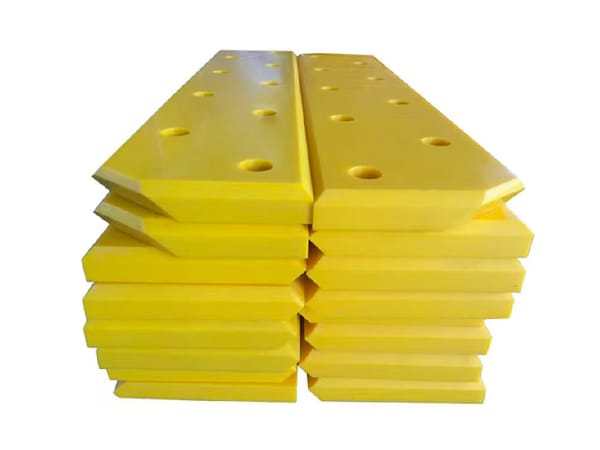
UHMWPE Sheet vs HDPE Sheet for Custom Plastic Parts
Many buyers do not only purchase plastic sheets.
They need finished plastic components.
In this case, material selection should be based on the part’s function.
If the part needs to slide, guide, protect, or resist abrasion, UHMWPE is usually preferred.
If the part is used as a panel, liner, cover, tank component, or general fabricated part, HDPE may be more suitable.
For example, a conveyor chain guide is usually better made from UHMWPE.
A chemical tank liner is often better made from HDPE.
Yunzhan can help buyers choose the right material based on drawings, samples, working conditions, and project requirements.
Common Buying Mistakes
Choosing HDPE When Wear Resistance Is Critical
HDPE is durable, but it may not be enough for high-abrasion environments.
If the part faces continuous friction or abrasive materials, UHMWPE may offer better service life.
Choosing UHMWPE When HDPE Is Enough
UHMWPE has excellent performance, but not every project requires it.
For general panels, tank lining, or cost-sensitive fabrication, HDPE may be more practical.
Ignoring Machining Requirements
Custom plastic parts may require holes, grooves, slots, tight tolerances, or surface finishing.
Buyers should provide drawings or samples when possible.
Focusing Only on Thickness
Thickness is important, but it is not the only factor.
Material type, load, wear condition, chemical exposure, temperature, and installation method also affect performance.
Not Explaining the Application
A supplier can recommend the right material only when the application is clear.
A simple inquiry like “quote plastic sheet” is usually not enough for accurate material selection.
How to Choose Between UHMWPE and HDPE Sheets
Step 1: Define the Working Environment
First, identify where the material will be used.
Is it indoor or outdoor?
Is it dry, wet, clean, abrasive, or chemically exposed?
This helps determine whether UHMWPE or HDPE is more suitable.
Step 2: Confirm the Main Performance Requirement
Every project has a main requirement.
It may be wear resistance, chemical resistance, impact resistance, low friction, moisture resistance, or cost control.
If wear and low friction are most important, UHMWPE sheet is often the better choice.
If chemical resistance and general fabrication are more important, HDPE sheet may be more suitable.
Step 3: Check Load and Contact Conditions
Consider whether the sheet will carry load, receive impact, support sliding movement, or contact abrasive materials.
For moving or high-contact parts, UHMWPE usually performs better.
For panels or liners with moderate load, HDPE may be enough.
Step 4: Consider Processing Needs
Will the sheet be cut to size?
Does it need holes, grooves, slots, or CNC machining?
Does it need a special surface finish?
Yunzhan can provide sheet processing services to help buyers reduce secondary processing work.
Step 5: Confirm Size, Thickness, and Quantity
After selecting the material, confirm the sheet size, thickness, color, quantity, tolerance, and packaging requirements.
For export orders, container loading and shipping method should also be considered.
Why Choose Yunzhan for UHMWPE and HDPE Sheets?
Yunzhan supplies engineering plastic sheets and custom plastic components for industrial, construction, marine, mining, machinery, agricultural, and environmental applications.
For UHMWPE sheet and HDPE sheet buyers, Yunzhan provides more than standard sheet supply.
We can support:
- Material selection
- Custom size production
- Cutting to size
- CNC machining
- Drilling and shaping
- Color customization
- Bulk order supply
- OEM/ODM processing
Custom Material Solutions
Yunzhan can recommend UHMWPE or HDPE based on your real working conditions.
Whether you need wear-resistant liners, low-friction guide parts, chemical-resistant panels, or outdoor plastic sheets, our team can help match the material to the application.
Custom Size and Thickness
Different projects require different specifications.
Yunzhan can provide customized sheet size, thickness, color, and processing according to customer requirements.
CNC Machining and Fabrication Support
Many buyers need finished parts, not only raw sheet material.
Yunzhan can process UHMWPE and HDPE sheets into custom components based on drawings or samples.
Bulk Order and Export Support
For distributors, equipment manufacturers, contractors, and industrial buyers, Yunzhan supports bulk production and export supply.
We can assist with packaging, quantity planning, and product customization for long-term purchasing needs.
What Information Should You Send for a Faster Quote?
A clear inquiry helps Yunzhan recommend the right material and provide a faster quotation.
| Information to Provide | Why It Matters |
|---|---|
| Material preference | Helps confirm UHMWPE or HDPE |
| Application | Determines the main performance requirement |
| Size | Needed for production quotation |
| Thickness | Affects material cost and performance |
| Quantity | Impacts production planning |
| Color | Important for identification or project use |
| Drawing or sample | Needed for custom machining |
| Working environment | Helps evaluate material suitability |
| Tolerance requirement | Important for machined parts |
| Destination country | Needed for shipping reference |
A useful inquiry can be simple but specific:
“We need UHMWPE sheets for conveyor wear strips. The material will be used in a wet production environment with continuous chain movement. Please quote 20 mm thickness in natural color, and advise if CNC cutting is available according to our drawing.”
This gives Yunzhan enough information to provide a more practical recommendation.
Practical Example: Conveyor Parts
A machinery manufacturer needs plastic parts for a conveyor system.
The parts will guide moving chains and reduce friction during continuous operation.
The working environment is wet, and the customer wants to reduce metal wear and noise.
In this case, UHMWPE sheet is usually better than HDPE sheet.
The reason is simple: the application requires low friction, wear resistance, and long-term sliding performance.
If the same customer needs side panels or protective covers, HDPE sheet may be enough.
This is why each part should be evaluated by function.
Practical Example: Chemical Equipment
A factory needs plastic sheets for chemical tank lining and corrosion-resistant panels.
The application requires moisture resistance, chemical resistance, easy fabrication, and cost control.
There is no heavy sliding or abrasive movement.
In this case, HDPE sheet may be more suitable.
If some parts inside the same system are exposed to abrasion, UHMWPE can be used only for those high-wear sections.
Sometimes, using both materials in the same project creates a better balance of performance and cost.
Conclusion
UHMWPE sheet and HDPE sheet are both valuable engineering plastic materials.
UHMWPE sheet is usually better for high-wear, low-friction, impact-resistant, and sliding applications.
HDPE sheet is often more suitable for chemical resistance, outdoor use, general fabrication, and cost-effective plastic sheet projects.
The right choice depends on your application, load, wear condition, chemical exposure, processing needs, and budget.
Yunzhan supplies custom UHMWPE and HDPE sheets for industrial buyers, equipment manufacturers, contractors, distributors, and engineering projects.
Send us your required material, size, thickness, quantity, application, and drawings if available. Our team can help recommend a suitable plastic sheet solution for your project.
FAQ
What is the main difference between UHMWPE sheet and HDPE sheet?
UHMWPE sheet offers better wear resistance, impact resistance, and low-friction performance.
HDPE sheet is widely used for chemical resistance, outdoor durability, and general plastic fabrication.
Is UHMWPE stronger than HDPE?
UHMWPE generally performs better in impact resistance, wear resistance, and sliding applications.
HDPE may be better for projects that need chemical resistance, easy fabrication, and cost control.
When should I choose UHMWPE sheet?
Choose UHMWPE sheet when your application involves heavy wear, sliding contact, abrasion, impact, conveyor movement, chute lining, hopper lining, or marine fender systems.
When should I choose HDPE sheet?
Choose HDPE sheet for chemical tank liners, outdoor panels, cutting boards, ground protection mats, fabricated plastic parts, and general industrial applications where extreme wear resistance is not required.
Can UHMWPE and HDPE sheets be machined?
Yes. Both UHMWPE and HDPE sheets can be cut, drilled, shaped, and CNC machined.
Yunzhan can provide custom machining based on drawings or samples.
Which material is better for conveyor wear strips?
UHMWPE sheet is usually better for conveyor wear strips because it has excellent wear resistance and low friction.
Which material is better for chemical tank liners?
HDPE sheet is commonly used for chemical tank liners because it offers good chemical resistance, moisture resistance, and fabrication performance.
Can Yunzhan customize UHMWPE and HDPE sheets?
Yes. Yunzhan can customize material, size, thickness, color, cutting, CNC machining, drilling, shaping, and finished plastic parts according to customer requirements.