
Table of Contents
Introduction
When a crane is set up on site, lifting safety does not depend only on the machine’s rated capacity. The ground below the outriggers is just as important. If the support area is too small, the soil is weak, or the outrigger pressure is not properly distributed, the crane may become unstable even when the equipment itself is working normally.
This is why crane outrigger pads are widely used in construction, utility projects, lifting operations, crane rental fleets, and industrial maintenance jobs. A properly selected pad helps spread the load over a larger area, reduce ground pressure, protect the surface, and support safer equipment operation.
For buyers, the main challenge is choosing the right pad. Size, thickness, material, ground condition, equipment load, and handle design all affect performance. In this guide, Yunzhan explains how to choose crane outrigger pads more confidently, especially when sourcing UHMWPE or HDPE pads for repeated professional use.
What Are Crane Outrigger Pads?
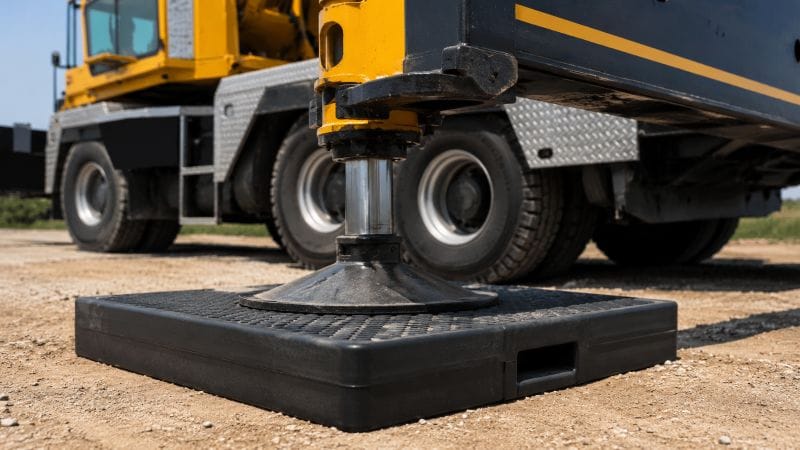
Crane outrigger pads are support pads placed under the outriggers, stabilizer legs, or jacks of lifting and support equipment. They are commonly used with mobile cranes, truck-mounted cranes, boom trucks, aerial work platforms, concrete pump trucks, utility vehicles, fire rescue vehicles, and other heavy-duty machines.
Their main function is to create a stable support base and help transfer concentrated load to the ground more safely.
Although crane outrigger pads look simple, the selection process should not be treated casually. A pad used for a small aerial lift is not necessarily suitable for a heavy mobile crane. A pad that works well on concrete may not be enough for wet clay, soft grass, or loose soil.
Why Crane Outrigger Pads Matter
Crane outriggers create concentrated pressure at each support point. If that pressure is applied directly to soft soil, asphalt, gravel, turf, or uneven ground, the surface may sink, crack, shift, or deform.
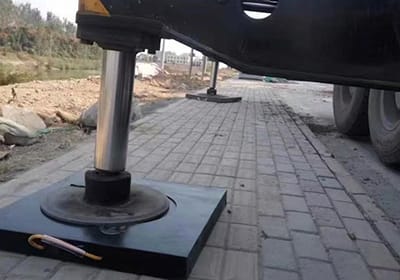
Crane outrigger pads help solve this problem by increasing the contact area between the outrigger foot and the ground. Instead of allowing the load to press into one small point, the pad distributes the force across a wider surface.
For contractors and crane operators, this brings several practical benefits.
Key Benefits of Using Crane Outrigger Pads
Improved Equipment Stability
A stable base helps the crane remain level during lifting. This is especially important when working on uneven ground, roadside areas, construction sites, or temporary work platforms.
Better Load Distribution
Crane outrigger pads reduce concentrated pressure by spreading the load over a larger area. This helps lower the risk of ground settlement during lifting operations.
Reduced Ground Damage
Direct outrigger pressure can damage asphalt, concrete, lawns, paving, and other finished surfaces. A suitable pad helps protect the ground and reduce repair costs after the project.
Safer Job Site Setup
Outrigger pads cannot replace proper lifting planning, but they are an important part of safe site preparation. They help operators create a more controlled and stable support condition.
Common Applications of Crane Outrigger Pads
Crane outrigger pads are used in many industries where lifting equipment or stabilizer legs need reliable ground support.
| Application Area | Typical Equipment | Why Outrigger Pads Are Needed |
|---|---|---|
| Construction sites | Mobile cranes, boom trucks | Improve ground support and reduce sinking |
| Crane rental fleets | Different crane models | Reusable pads for multiple job sites |
| Utility projects | Service trucks, aerial lifts | Support stabilizer legs on roadside or soil |
| Concrete pumping | Pump trucks | Reduce pressure under stabilizer legs |
| Industrial maintenance | Lifting and access equipment | Protect floors and improve stability |
| Emergency rescue | Fire trucks, rescue vehicles | Support equipment during urgent operations |
This table can help Google and users quickly understand the product’s application scope.
Key Factors When Choosing Crane Outrigger Pads
Choosing crane outrigger pads should not be based only on price or appearance. A professional buyer should consider load, ground condition, material, size, thickness, shape, and customization requirements.
1. Confirm the Maximum Outrigger Load
The first step is to understand the maximum load applied to each outrigger. Many buyers make the mistake of choosing outrigger pads based only on the total weight of the crane, but this is not enough.
During lifting, the load is not always evenly distributed across all outriggers. Boom angle, lifting radius, counterweight, load position, and site setup can all affect outrigger reaction force. In some working conditions, one outrigger may carry much more force than the others.
Before purchasing crane outrigger pads, check the crane manual or consult the equipment manufacturer to confirm the maximum outrigger load. This information is more useful than total crane weight when selecting pad size and thickness.
2. Evaluate the Ground Condition
Ground condition directly affects how outrigger pads perform. The same pad may work differently on concrete, asphalt, gravel, grass, clay, mud, or sand.
| Ground Condition | Common Risk | Selection Suggestion |
|---|---|---|
| Concrete | Surface cracking under high pressure | Use proper pad size to spread the load |
| Asphalt | Sinking or deformation in heat | Choose a larger contact area |
| Gravel | Uneven contact | Use durable material and suitable thickness |
| Grass | Rutting and soil compression | Use larger pads to reduce ground pressure |
| Clay | Softening after rain | Evaluate ground strength carefully |
| Muddy soil | Sinking and instability | Use extra support or larger pads |
| Sand | Low bearing capacity | Consider wider load distribution |
For soft or uncertain ground, outrigger pads should be used together with proper site assessment. In some cases, additional ground preparation may be required.
3. Choose the Right Material
Material selection affects strength, durability, weight, moisture resistance, and service life. Traditional wood blocking has been used for many years, but it can split, absorb water, rot, and become inconsistent over time. Steel plates are strong, but they are heavy, difficult to handle, and may rust.
For many modern lifting applications, UHMWPE and HDPE crane outrigger pads are more practical.
UHMWPE Crane Outrigger Pads
UHMWPE is commonly used for heavy-duty crane outrigger pads because it offers excellent impact resistance, wear resistance, moisture resistance, and long service life.
UHMWPE outrigger pads are suitable for:
Mobile cranes
Concrete pump trucks
Heavy-duty stabilizer systems
Crane rental fleets
Industrial lifting projects
Repeated outdoor use
For buyers who need reliable performance under frequent or demanding use, UHMWPE is usually a strong choice.
HDPE Crane Outrigger Pads
HDPE is also widely used for stabilizer pads and medium-duty support applications. It offers good toughness, weather resistance, and easier handling.
HDPE outrigger pads are suitable for:
Aerial work platforms
Utility vehicles
Smaller cranes
General construction support
Light to medium-duty stabilizer use
For buyers who need a practical support pad for standard applications, HDPE can be a cost-effective option.
UHMWPE vs HDPE Outrigger Pads
Both UHMWPE and HDPE belong to engineering plastic materials, but they perform differently in demanding applications.
| Factor | UHMWPE Outrigger Pads | HDPE Outrigger Pads |
|---|---|---|
| Best suited for | Heavy-duty and frequent use | Light to medium-duty support |
| Impact resistance | Excellent | Good |
| Wear resistance | Excellent | Good |
| Moisture resistance | Excellent | Excellent |
| Handling | Easier than steel | Lightweight and easy to move |
| Typical users | Crane rental companies, contractors, industrial fleets | Utility teams, general contractors, equipment users |
| Long-term value | Strong for repeated demanding use | Practical for standard support needs |
If the pads will be used every day, exposed to harsh sites, or required for heavier lifting equipment, UHMWPE is usually the better long-term option. If the application is moderate and the buyer needs a practical pad for general stabilizer support, HDPE may be suitable.
Yunzhan can provide both UHMWPE and HDPE crane outrigger pads, helping buyers choose the right material according to equipment load, working conditions, budget, and service life expectations.
4. Select the Right Pad Size
Pad size determines how effectively the load is distributed across the ground. A larger contact area usually means lower ground pressure, but the pad must also have enough thickness and material strength to resist bending.
A simple principle is:
Ground pressure decreases when the same load is distributed over a larger pad area.
However, real-world selection is not based on area alone. Buyers also need to consider the outrigger foot size, ground condition, load level, and whether the pad will be used on a flat or uneven surface.
For example, a crane working on firm concrete may require a smaller pad than the same crane working on wet clay or soft grass. If the equipment will remain in position for a long time, the pad should also be selected with sustained pressure in mind.
5. Choose Suitable Thickness
Thickness affects pad rigidity and resistance to bending. If a pad is too thin for the load, it may flex excessively, reduce stability, and shorten service life.
The required thickness depends on:
Equipment load
Pad size
Material type
Ground condition
Frequency of use
Handling method
Storage and transportation needs
That does not mean the thickest pad is always the best choice. Overly thick pads can become heavier, harder to carry, and more expensive to ship. The goal is to choose a specification that provides enough support without creating unnecessary handling problems.
For buyers who are unsure about thickness, it is better to provide Yunzhan with the equipment type, estimated outrigger load, ground condition, and expected use frequency. This makes the recommendation more accurate.
6. Consider Shape and Handle Design
Crane outrigger pads are commonly made in square, rectangular, or round shapes. Each shape has different advantages.
| Shape | Main Advantage | Suitable Use |
|---|---|---|
| Square pads | Easy to stack, transport, and position | General crane and equipment support |
| Rectangular pads | Longer support area | Limited space or special stabilizer layouts |
| Round pads | Easy to position under smaller support feet | Aerial lifts, utility vehicles, smaller stabilizers |
Handle design also matters. A pad may use rope handles, cut-out handles, recessed handles, or customized lifting points. For small and medium pads, manual handling may be enough. For larger or thicker pads, proper handle design improves efficiency and reduces worker strain.
Yunzhan can customize pad shape, size, thickness, and handle structure according to how the pads will be used, stored, and transported.
Why Custom Crane Outrigger Pads Are Valuable for B2B Buyers
Many B2B buyers need more than a standard black pad. Crane rental companies may want engraved logos to reduce loss and improve brand visibility. Equipment distributors may need consistent sizes for private-label supply. Contractors may require special dimensions to match their cranes, trucks, or storage systems.
Common customization options include:
Custom size
Custom thickness
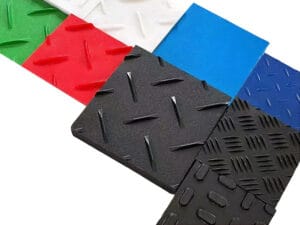
Custom color
Handle design
Surface finish
Logo engraving
OEM/ODM packaging
Bulk order production
Working with a direct manufacturer makes customization easier. Yunzhan supports custom UHMWPE and HDPE outrigger pads for contractors, rental fleets, industrial users, and distributors.
Plastic Outrigger Pads vs Wood Blocking
Wood blocking is still used on some job sites because it is familiar and easy to source locally. However, wood has several limitations in professional lifting applications.
It can absorb water, crack, split, rot, and become inconsistent after repeated use. Natural defects inside the wood may also affect reliability. In wet or muddy conditions, wood becomes harder to clean and may lose strength over time.
Plastic outrigger pads made from UHMWPE or HDPE offer more consistent performance. They resist moisture, are easier to clean, and can be reused across different projects.
| Comparison | Plastic Outrigger Pads | Wood Blocking |
|---|---|---|
| Moisture resistance | High | Low to moderate |
| Reusability | Strong | Limited |
| Surface consistency | More controlled | May vary naturally |
| Cleaning | Easy | Difficult after mud or oil exposure |
| Customization | Size, color, handle, logo available | Limited |
| Professional appearance | Better for fleet and rental use | Basic |
For repeated lifting operations, plastic crane outrigger pads are usually more dependable than wood blocking.
Plastic Outrigger Pads vs Steel Plates
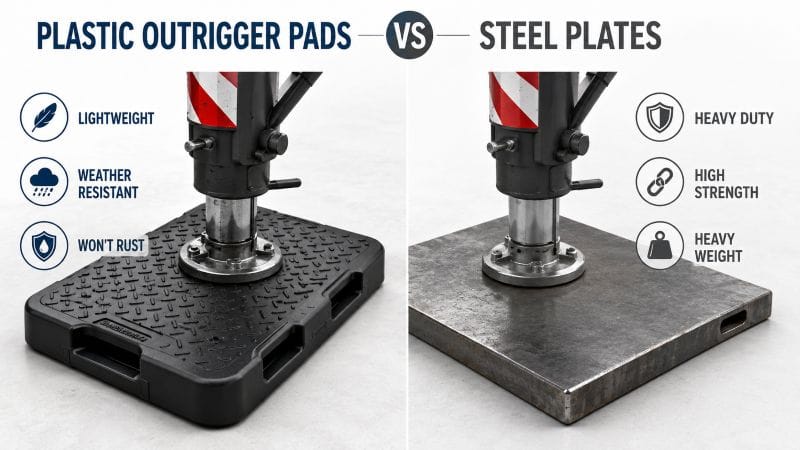
Steel plates are strong, but they are not always practical. They are heavy, difficult to move, expensive to transport, and often require machinery for placement. Steel may also rust and can become slippery in wet conditions.
UHMWPE and HDPE outrigger pads are lighter than steel, corrosion-resistant, and easier to handle. For contractors and rental companies that move equipment from one site to another, this handling advantage can save time and labor.
Steel may still be needed for extreme loading or special engineering conditions, but for many crane support, stabilizer support, and construction applications, plastic pads offer a better balance between strength, usability, and long-term value.
What Information Should You Provide Before Requesting a Quote?
A clear inquiry helps the supplier recommend the right product faster. Instead of simply asking for “crane outrigger pads price,” it is better to provide project details.
| Information to Provide | Why It Matters |
|---|---|
| Equipment type | Helps understand the support requirement |
| Maximum outrigger load | Determines pad size and thickness |
| Outrigger foot size | Helps match the contact area |
| Ground condition | Affects load distribution needs |
| Required size | Supports accurate production quotation |
| Required thickness | Affects strength and material cost |
| Quantity | Impacts production and shipping plan |
| Color requirement | Useful for project or brand needs |
| Handle design | Affects handling convenience |
| Logo requirement | Useful for rental companies and distributors |
| Destination country | Needed for shipping reference |
A stronger inquiry would be:
“We need UHMWPE outrigger pads for mobile crane rental use. The pads will be used on construction sites and asphalt surfaces. Required size is 600 × 600 mm, but we are open to your suggestion. Please quote 100 pieces with rope handles and engraved logo.”
This type of inquiry gives Yunzhan enough information to provide a more accurate recommendation and quotation.
Practical Example: Choosing Pads for a Crane Rental Fleet
A crane rental company needs outrigger pads that can be used across many job sites. The pads may be placed on asphalt, gravel, grass, and compacted soil. They will be transported frequently and used by different operators.
For this buyer, durability and handling convenience are more important than choosing the lowest-cost option. UHMWPE crane outrigger pads would likely be a strong choice because they can withstand repeated use and outdoor conditions.
Custom logo engraving would also be useful because rental pads are often moved between sites and may be misplaced. Square pads may be selected for easy stacking and storage, while rope handles can make daily handling more convenient.
If several crane models are involved, the buyer may order multiple pad sizes to match different outrigger loads. This is a typical case where custom manufacturing support can improve both safety and operational efficiency.
Common Buying Mistakes to Avoid
Choosing Pads Only by Price
A cheaper pad may look attractive at first, but if it bends, cracks, or wears quickly, the long-term cost becomes higher.
Ignoring Ground Conditions
A pad that works on concrete may not be suitable for wet soil. Buyers should always consider the weakest ground condition where the equipment may be used.
Selecting Pads That Are Too Small
Small pads are easier to handle, but they may not provide enough area to distribute the load properly.
Overlooking Handle Design
A strong pad is useful only if workers can move and position it safely. Handle design should be considered together with size and thickness.
Confirming Custom Details Too Late
Color, logo, handle type, size tolerance, and packaging should be discussed before production to avoid delays.
Why Choose Yunzhan for Crane Outrigger Pads?
Yunzhan supplies engineering plastic products for industrial, construction, marine, machinery, and heavy-duty applications. For crane outrigger pads, Yunzhan focuses on practical material selection, stable production, and customization support.
Buyers can choose UHMWPE or HDPE materials according to their application. Pads can be customized by size, thickness, color, handle design, and logo. CNC cutting, drilling, shaping, and finishing services are also available for custom requirements.
For contractors, Yunzhan helps provide reliable support pads for daily lifting work. For rental companies, Yunzhan can support branded pads for repeated fleet use. For distributors, Yunzhan can provide bulk supply and OEM/ODM options.
If you are sourcing crane outrigger pads for construction sites, crane rental fleets, utility vehicles, aerial lifts, pump trucks, or industrial maintenance, Yunzhan can help you choose a suitable specification based on real working conditions.
When Should Crane Outrigger Pads Be Replaced?
Even high-quality pads should be inspected regularly. Replacement may be needed if the pad shows:
Deep cracks
Severe deformation
Broken handles
Excessive surface wear
Unstable contact
Visible structural damage
Pads used in heavy-duty lifting or rental environments should be checked more frequently because they are exposed to different operators, surfaces, and load conditions.
Conclusion
Crane outrigger pads play a critical role in safer lifting, ground protection, and equipment stability. Choosing the right pad requires more than selecting a standard size from a catalog. Buyers should consider maximum outrigger load, ground condition, pad material, size, thickness, shape, handling design, and long-term reuse requirements.
UHMWPE outrigger pads are a strong choice for heavy-duty and frequent use, while HDPE outrigger pads are practical for light to medium-duty support applications. For B2B buyers, customization can also improve usability, branding, and project fit.
Yunzhan provides custom UHMWPE and HDPE crane outrigger pads for contractors, equipment rental companies, industrial users, and distributors. Send us your equipment type, required size, thickness, quantity, ground condition, and customization needs, and our team will help recommend a suitable solution for your project.
FAQ
What are crane outrigger pads used for?
Crane outrigger pads are placed under outriggers or stabilizer legs to spread equipment load over a larger ground area. They help improve stability, reduce ground pressure, and protect the surface during lifting or support operations.
What material is best for crane outrigger pads?
UHMWPE is often used for heavy-duty crane outrigger pads because it offers strong impact resistance, wear resistance, and moisture resistance. HDPE is also a practical choice for many light to medium-duty support applications.
How do I choose the right outrigger pad size?
The right size depends on the maximum outrigger load, ground condition, outrigger foot size, material strength, and working environment. Softer ground usually requires a larger support area.
Are plastic outrigger pads better than wood?
For repeated professional use, plastic outrigger pads are generally more consistent and durable than wood. They do not absorb water easily, are easier to clean, and can be customized for different applications.
Can Yunzhan customize crane outrigger pads?
Yes. Yunzhan can customize size, thickness, color, handle design, logo engraving, surface finish, and packaging for UHMWPE and HDPE crane outrigger pads.
Are HDPE outrigger pads suitable for cranes?
HDPE outrigger pads can be suitable for light to medium-duty cranes, aerial lifts, utility vehicles, and stabilizer support. For heavier or more demanding applications, UHMWPE may be recommended.
What should I send when asking for a quotation?
You can send the equipment type, maximum outrigger load, required pad size, thickness, quantity, ground condition, handle preference, logo requirement, and destination country. This helps Yunzhan provide a faster and more accurate quotation.