

Table of Contents
Introduction
When heavy equipment needs to move across soft ground, grass, mud, sand, or uneven terrain, the surface can quickly become damaged, unstable, and unsafe. For contractors, rental companies, landscapers, utility crews, and event organizers, this often means delayed work, higher repair costs, and more difficult site access.
HDPE ground protection mats are designed to solve this problem. They help create a stable temporary access surface, protect the ground underneath, and reduce the risk of equipment getting stuck. But not every mat is suitable for every job. Choosing the right HDPE ground protection mats depends on ground conditions, equipment weight, project duration, surface texture, mat size, and connection method.
This guide explains how to choose the right mats for heavy equipment applications, so you can make a more practical and cost-effective purchasing decision.
What Are HDPE Ground Protection Mats?
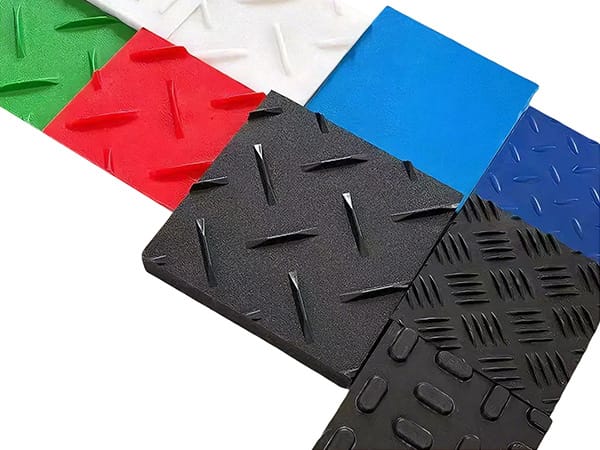
HDPE ground protection mats are temporary roadway or surface protection panels made from high-density polyethylene. They are commonly used to protect grass, soil, construction sites, landscaped areas, and sensitive ground from damage caused by vehicles, machinery, and repeated foot traffic.
Compared with plywood or steel plates, HDPE mats are lighter, easier to handle, more resistant to moisture, and reusable for multiple projects. Their surface is usually textured to improve traction, while the material itself offers strong impact resistance, wear resistance, and weather resistance.
Common users include:
Construction companies
Crane rental companies
Utility maintenance teams
Landscaping contractors
Event setup companies
Oil and gas field service teams
Agricultural and forestry operators
Heavy equipment rental companies
For many projects, ground protection mats are not just an optional accessory. They are part of site safety, equipment mobility, and ground restoration cost control.
Why HDPE Is Commonly Used for Ground Protection Mats
HDPE is one of the most widely used materials for ground protection mats because it offers a good balance of strength, flexibility, durability, and weight.
Strong Impact Resistance
Heavy equipment often creates concentrated pressure when turning, braking, loading, or moving across uneven surfaces. HDPE has good impact resistance, which helps the mat absorb pressure without cracking easily under normal use conditions.
Moisture and Weather Resistance
Outdoor job sites are rarely dry and clean. Rain, mud, snow, and water exposure are common. HDPE does not absorb water like wood, so it is less likely to rot, swell, split, or lose shape after repeated outdoor use.
Reusable and Easy to Clean
After a project is finished, HDPE ground protection mats can usually be cleaned and reused on the next site. This makes them more practical for contractors and rental businesses that need long-term equipment rather than disposable ground covering.
Easier Handling Than Steel Plates
Steel plates can provide high strength, but they are heavy, difficult to transport, and often require machinery for placement. HDPE mats are much easier to move, install, and reposition, especially on projects where flexibility and speed matter.
Main Applications of HDPE Ground Protection Mats
HDPE ground protection mats can be used in many industries. The key is to match the mat type with the expected load and site condition.
Construction Site Access
Construction projects often need temporary access roads for excavators, trucks, cranes, loaders, and other machinery. On soft or muddy ground, vehicles may sink, slip, or create deep ruts. HDPE mats help distribute weight and create a more stable driving surface.
Crane and Lifting Operations
Crane operations require stable ground conditions. While crane outrigger pads are used directly under the outriggers, HDPE ground protection mats can help create temporary access routes for support vehicles, lifting equipment, and site preparation.
Landscaping and Lawn Protection
For landscaping projects, golf courses, parks, and residential areas, surface damage can become a major cost. HDPE ground protection mats help reduce turf damage when machinery needs to cross grass or soft landscaped areas.
Outdoor Events
Outdoor concerts, exhibitions, sports events, and temporary venues often require walkways, vehicle access routes, and ground protection. HDPE mats help prevent muddy surfaces, improve pedestrian movement, and protect grass from heavy traffic.
Utility and Maintenance Work
Power line maintenance, pipeline repair, telecom installation, and municipal work often take place in difficult ground conditions. Temporary ground mats help crews access the work area more safely and efficiently.
Key Factors to Consider When Choosing HDPE Ground Protection Mats
Choosing HDPE ground protection mats should not only be based on price or size. The right choice depends on the actual working environment.
1. Equipment Weight and Load Requirements
The first thing to consider is the type and weight of equipment that will use the mats.
A mat used for pedestrian access or light vehicles does not need the same strength as a mat used for excavators, cranes, loaders, or trucks. Heavy equipment creates higher ground pressure, especially when turning or operating on soft soil.
Before purchasing, you should confirm:
Equipment type
Operating weight
Maximum wheel or track load
Whether the equipment will move slowly or turn frequently
Whether the mat will be used for static loading or vehicle access
For example, a compact loader and a heavy mobile crane have very different load requirements. If the mat is too thin or too small for the load, it may bend excessively, shift, or fail to protect the ground properly.
2. Ground Conditions
Ground condition is one of the most important selection factors.
HDPE ground protection mats perform differently on grass, mud, sand, clay, gravel, or uneven soil. Softer ground usually requires thicker mats or larger surface coverage to improve weight distribution.
Common Ground Conditions and Mat Selection
| Ground Condition | Common Challenge | Suggested Mat Focus |
|---|---|---|
| Grass or lawn | Turf damage, rutting | Textured surface, moderate thickness, easy handling |
| Muddy soil | Sinking, slipping, unstable access | Thicker mat, strong connection system |
| Sand | Low bearing capacity, mat movement | Larger size, good surface grip |
| Gravel | Uneven contact, mat wear | Wear-resistant material, suitable thickness |
| Clay soil | Sticky surface, water retention | Easy-clean HDPE, anti-slip texture |
| Sensitive landscaping | Surface protection priority | Lightweight mat, smooth underside |
If the site has very soft soil or repeated heavy loading, it is better to choose a more durable specification rather than selecting the thinnest option.
3. Mat Thickness
Thickness affects strength, flexibility, weight, and cost. Thicker mats generally provide better performance for heavy-duty applications, but they are also heavier and may be less convenient to handle manually.
For light-duty use, thinner mats may be enough. For construction access, crane support routes, or repeated heavy vehicle traffic, thicker HDPE ground protection mats are usually more reliable.
When selecting thickness, consider:
How heavy the equipment is
How soft the ground is
How long the mats will be used
Whether the mats will be reused frequently
Whether workers need to carry the mats by hand
A good supplier should be able to recommend suitable thickness according to your project conditions instead of offering only one standard option.
4. Mat Size
Mat size affects coverage area, installation speed, transport efficiency, and weight distribution.
Larger mats cover more area and reduce the number of connection points. They are useful for temporary roadways and large equipment access. Smaller mats are easier to carry, store, and position in tight job sites.
Common selection logic:
Larger mats: better for temporary roads, heavy equipment routes, open construction sites
Smaller mats: better for landscaping, repair work, narrow access areas, manual handling
Before confirming size, ask yourself:
How wide should the access route be?
Will vehicles drive in a straight line or turn?
How much area needs to be protected?
How will the mats be transported?
Will workers move them manually or with equipment?
For B2B buyers, custom size can be especially useful when standard mat dimensions do not match the project or container loading requirements.
5. Surface Texture
Surface texture is not just about appearance. It directly affects traction and safety.
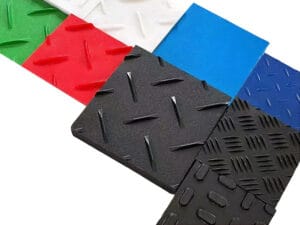
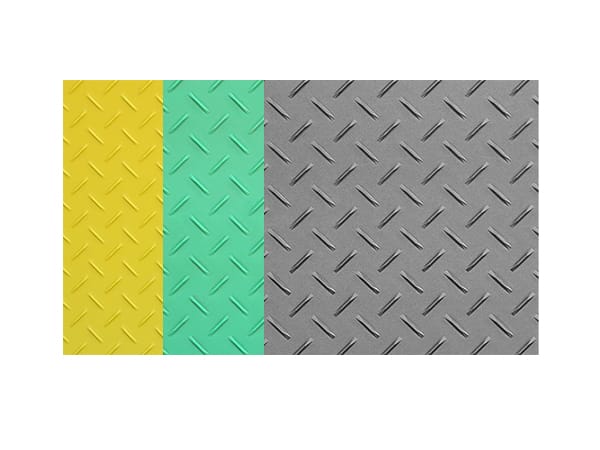
HDPE ground protection mats usually have one or two textured surfaces. Some mats are designed with aggressive patterns for vehicle traction, while others have a lighter texture for pedestrian access or lawn protection.
Common Surface Designs
| Surface Type | Main Benefit | Suitable Use |
|---|---|---|
| Diamond texture | Strong traction | Construction sites, vehicle access |
| Anti-slip pattern | Improved safety | Wet or muddy conditions |
| Smooth underside | Reduces turf damage | Grass and landscaping |
| Double-sided texture | Flexible installation | Heavy-duty temporary roads |
If the mats will be used in wet, muddy, or sloped areas, anti-slip texture is very important. If the main purpose is lawn protection, the underside design also matters because an overly aggressive underside may damage the surface below.
6. Connection System
When mats are used together to form a roadway or large working platform, connections help keep them aligned and reduce movement.
Common connection options include metal connectors, plastic connectors, or locking systems. The right choice depends on the project type and expected movement.
For straight access roads, simple connectors may be enough. For heavy equipment turning areas, stronger connection systems are recommended because turning force can cause mats to shift.
A good connection system helps:
Improve surface stability
Reduce gaps between mats
Make installation cleaner
Improve safety for vehicles and pedestrians
Extend mat service life by reducing uneven stress
If the project involves frequent installation and removal, the connector should also be easy to use.
7. Load Distribution and Ground Pressure
Many buyers focus only on equipment weight, but ground pressure is just as important. Two machines with similar weight may create different pressure depending on tire size, track width, contact area, and operating condition.
Tracked equipment often distributes weight better than wheeled equipment, but it can still damage soft ground during turning. Wheeled vehicles may create deeper ruts because pressure is concentrated under the tires.
When discussing a project with a supplier, it is useful to provide:
Equipment weight
Tire or track type
Expected traffic frequency
Ground condition
Whether the equipment will carry loads
Whether turning or static operation is involved
This information helps the supplier recommend a more suitable mat specification.
8. Reusability and Service Life
For rental companies, contractors, and industrial users, reusability is one of the main reasons to choose HDPE mats.
A reusable mat should have:
Good wear resistance
Stable thickness
Strong impact resistance
Weather resistance
Easy-clean surface
Reliable connection holes
Resistance to cracking under normal use
Although a lower-cost mat may look attractive at first, it may not be economical if it wears out quickly or fails after limited use. For long-term business users, durability usually matters more than the lowest unit price.
9. Transportation and Storage
Transportation is often overlooked during purchasing. However, mat size and weight directly affect shipping cost, loading efficiency, and storage convenience.
Before ordering, consider:
How many mats fit in one container?
Can the mats be stacked easily?
Will forklifts be used for unloading?
How will they be transported between job sites?
Is manual handling required?
For export buyers, suppliers should provide clear packaging information, including stack height, pallet method, container loading quantity, and approximate weight.
10. Customization Options
Different projects may require different mat designs. A manufacturer with customization capability can provide better support for B2B buyers.
Common customization options include:
Custom size
Custom thickness
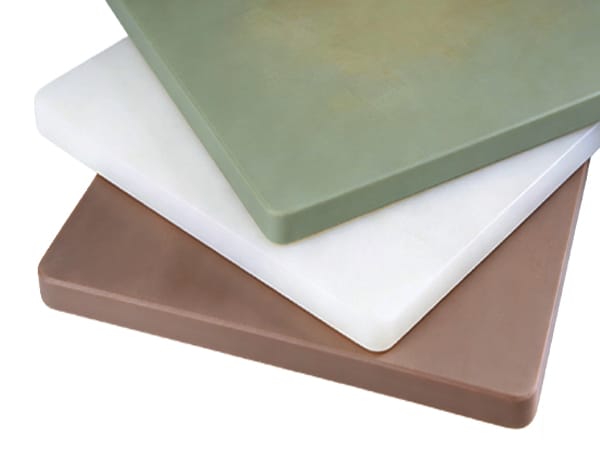
Custom color
Logo engraving
Different surface textures
Connector hole design
Special edge design
OEM/ODM production
Bulk order packaging
For rental businesses, branded mats can improve company visibility. For construction or industrial projects, custom dimensions may reduce waste and improve installation efficiency.
HDPE Ground Protection Mats vs Plywood
Many buyers compare HDPE mats with plywood because plywood is easy to find and lower in upfront cost. However, plywood has limitations, especially in wet and heavy-duty environments.
| Item | HDPE Ground Protection Mats | Plywood |
|---|---|---|
| Water resistance | Excellent | Poor to moderate |
| Reusability | High | Limited |
| Surface traction | Can be textured | Usually limited |
| Durability | Strong for repeated use | Easy to split or rot |
| Cleaning | Easy | Difficult after mud exposure |
| Weight | Manageable | Varies, can absorb water |
| Long-term value | Better for repeated projects | Lower initial cost but shorter life |
For temporary, light-duty use, plywood may work in some cases. But for repeated heavy equipment access, wet sites, and professional projects, HDPE ground protection mats are usually more reliable.
HDPE Ground Protection Mats vs Steel Plates
Steel plates are often used for very heavy loads, but they are not always the best solution.
| Item | HDPE Ground Protection Mats | Steel Plates |
|---|---|---|
| Weight | Lighter | Very heavy |
| Installation | Easier | Requires machinery |
| Ground protection | Good for many site types | Can damage soft surfaces |
| Handling cost | Lower | Higher |
| Corrosion resistance | Excellent | May rust |
| Traction | Textured options available | Can be slippery |
| Best use | Temporary access, ground protection | Extremely heavy-duty bridging or support |
Steel plates may still be necessary for certain extreme load conditions. However, for many construction, landscaping, event, utility, and industrial access projects, HDPE mats are easier to handle and more cost-effective.
How to Choose the Right HDPE Ground Protection Mat
Here is a practical selection process for buyers.
Step 1: Define the Application
First, identify how the mats will be used.
Are they for construction equipment?
Are they for lawn protection?
Are they for temporary roads?
Are they for pedestrian access?
Are they for event flooring?
Are they for crane or truck access?
Different applications require different thickness, surface texture, and mat size.
Step 2: Confirm Equipment Details
Provide the supplier with accurate equipment information. This includes equipment type, operating weight, tire or track system, and whether the equipment will carry loads.
The more specific the information, the more accurate the recommendation.
Step 3: Evaluate Ground Condition
Ground condition directly affects mat performance. Soft, wet, muddy, or uneven ground usually requires stronger mats and better connection systems.
Step 4: Choose Size and Thickness
Balance strength, handling convenience, transportation cost, and site coverage. For heavy-duty applications, avoid choosing mats that are too thin simply to reduce cost.
Step 5: Check Surface Texture
Choose anti-slip texture for vehicle access and wet conditions. For lawn protection, consider a mat with a surface design that balances traction and ground protection.
Step 6: Confirm Custom Options
If you need branding, special size, special hole design, or bulk packaging, confirm this before production.
Step 7: Ask for Quotation Details
A professional quotation should include product specification, material, size, thickness, quantity, packaging, delivery time, and shipping details.
Common Buying Mistakes to Avoid
Choosing Only by Price
The cheapest mat may not be suitable for heavy equipment or repeated use. If the mat fails too early, the real cost becomes higher.
Ignoring Ground Conditions
A mat that works well on firm grass may not perform the same way on soft mud or sand. Always match the mat to the actual site.
Selecting the Wrong Thickness
Too thin may lead to bending, shifting, or poor ground protection. Too thick may increase handling and transport cost unnecessarily.
Overlooking Connectors
For large coverage areas or vehicle access routes, connectors are important. Without them, mats may move during use.
Not Confirming Custom Requirements Early
If you need a special size, color, logo, or surface pattern, confirm it before ordering. This avoids delays and production changes.
What Information Should You Send to the Supplier?
To get a faster and more accurate quotation, prepare the following information:
| Information Needed | Why It Matters |
|---|---|
| Mat size | Determines coverage and production requirement |
| Thickness | Affects load performance and cost |
| Quantity | Impacts quotation and shipping |
| Application | Helps recommend the right mat type |
| Equipment weight | Determines load requirement |
| Ground condition | Affects thickness and connection suggestion |
| Surface texture | Impacts traction and safety |
| Color requirement | Important for branding or project standards |
| Destination country | Needed for shipping estimate |
| Custom logo | Useful for rental and brand visibility |
A simple inquiry such as “Please quote HDPE mats” is not enough for an accurate price. A detailed inquiry helps the supplier respond faster and recommend a better solution.
Why Work with a Manufacturer for HDPE Ground Protection Mats?
Working directly with a manufacturer can provide several advantages, especially for bulk buyers and long-term projects.
More Flexible Customization
Manufacturers can usually provide custom thickness, size, color, logo, and surface texture according to project requirements.
Better Technical Support
A manufacturer understands the material, production process, and application requirements. This makes it easier to choose the right specification.
Stable Bulk Supply
For rental companies, contractors, and distributors, stable supply is important. A reliable manufacturer can support repeat orders and project-based purchasing.
Quality Control
Direct manufacturing control helps ensure consistent material, dimensions, surface texture, and overall product quality.
Practical Example: Choosing Mats for a Construction Access Road
Imagine a contractor needs to create a temporary access road across soft ground for excavators and trucks.
The buyer should first confirm the equipment weight and traffic frequency. If trucks will drive repeatedly on muddy soil, the mat should have enough thickness and a strong anti-slip surface. Because multiple mats will be connected in a long route, connectors are also necessary to keep the access road stable.
If the site is narrow, smaller mats may be easier to install. If the site is open and equipment movement is frequent, larger mats may improve coverage efficiency. If the contractor plans to reuse the mats across many projects, investing in durable HDPE mats is usually more practical than using plywood repeatedly.
This type of decision-making is exactly why buyers should not choose mats only by size or price. The correct mat depends on real working conditions.
Conclusion
HDPE ground protection mats are a practical solution for protecting soft ground, improving equipment access, and reducing site restoration costs. For heavy equipment applications, the right mat should be selected based on equipment weight, ground condition, thickness, size, surface texture, connection system, and long-term reusability.
For contractors, rental companies, utility teams, landscapers, and industrial users, choosing suitable HDPE ground protection mats can improve site efficiency and reduce unnecessary damage. Before placing an order, provide your supplier with detailed project information, including size, thickness, quantity, ground condition, equipment type, and application. This helps ensure you receive a mat solution that fits your project instead of a generic product that may not perform well on site.
FAQ
What are HDPE ground protection mats used for?
HDPE ground protection mats are used to protect grass, soil, mud, sand, and other surfaces from damage caused by vehicles, heavy equipment, foot traffic, and temporary site access.
Are HDPE ground protection mats suitable for heavy equipment?
Yes. HDPE ground protection mats can be suitable for heavy equipment when the correct thickness, size, surface texture, and connection system are selected based on equipment weight and ground condition.
Are HDPE mats better than plywood?
For repeated outdoor use, HDPE mats are usually better than plywood because they are water-resistant, reusable, easier to clean, and less likely to rot, split, or absorb moisture.
Can HDPE ground protection mats be customized?
Yes. Common customization options include size, thickness, color, logo, surface texture, connector hole design, and OEM/ODM production.
How do I choose the right thickness?
The right thickness depends on equipment weight, ground condition, traffic frequency, and project duration. Heavy equipment and soft ground usually require thicker mats.
Do ground protection mats need connectors?
Connectors are recommended when multiple mats are used together, especially for temporary roads, heavy vehicle access, or areas where equipment will turn frequently.
Can HDPE ground protection mats be reused?
Yes. One of the main advantages of HDPE mats is reusability. With proper handling and cleaning, they can be used across multiple projects.
What information should I provide for a quotation?
You should provide mat size, thickness, quantity, application, equipment weight, ground condition, color requirement, surface texture preference, and destination country.