

Table of Contents
Introduction
Crane operations are widely used in construction, infrastructure, energy, and industrial installation projects, but they also carry significant safety risks. One of the most critical factors affecting crane stability is ground support under the outriggers.
Crane outrigger pads are designed to distribute concentrated loads over a larger surface area, reducing ground pressure and preventing sinking, tipping, or structural failure. However, selecting the correct pad is not a simple size decision—it requires proper load calculation, ground analysis, and material selection.
This guide explains how to calculate crane outrigger pad load capacity, how to choose the right size, and how to select suitable materials for safe and efficient lifting operations.
What is a Crane Outrigger Pad
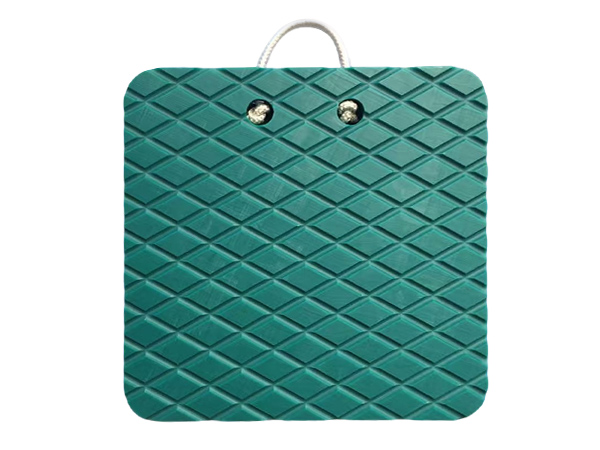
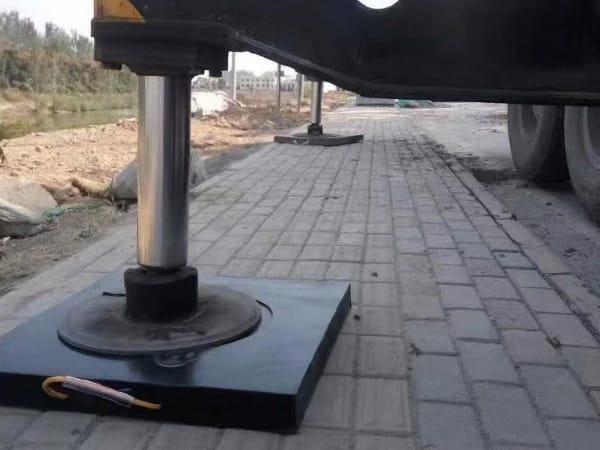
A crane outrigger pad is a load distribution component placed under crane outriggers to spread force evenly across the ground. Without it, the outrigger foot applies extremely high pressure to a small contact area, which may cause soil deformation or structural instability.
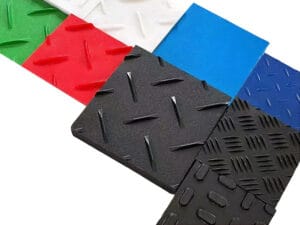
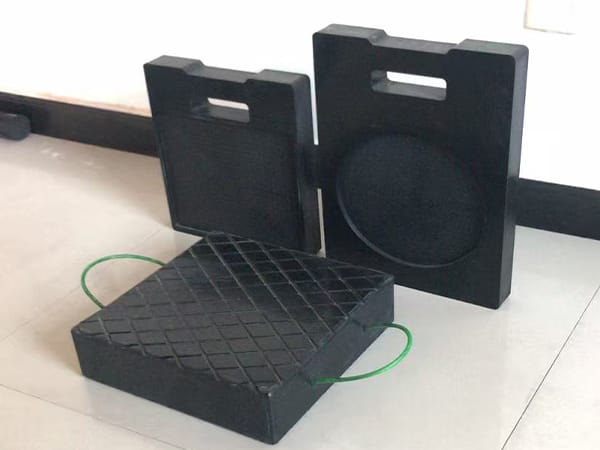
Outrigger pads are essential when operating cranes on soil, gravel, asphalt, or uneven surfaces. They are commonly manufactured from UHMWPE, steel, wood, or composite materials, depending on load requirements and working conditions. Among these, UHMWPE pads are increasingly preferred due to their balance of strength, weight, and durability.
Load Capacity Calculation Principle
The core principle behind outrigger pad selection is ground bearing pressure, which is calculated as:
Ground Bearing Pressure = Load ÷ Contact Area
The load includes crane self-weight, lifted load, and dynamic forces such as wind and movement. The contact area refers to the effective surface area of the pad touching the ground.
If the resulting pressure exceeds the ground’s bearing capacity, failure can occur regardless of crane strength.
How Crane Load Calculation Works
In practical engineering applications, total crane load is calculated by combining crane weight, maximum lifting capacity, and dynamic factors such as wind force and operational movement.
The total load is then divided by the number of outriggers, usually four, to determine the load per outrigger. However, load distribution is not always even, and one outrigger may carry more load depending on crane configuration and boom position.
After determining per-outrigger load, engineers evaluate the ground condition to understand how much pressure the surface can safely support. Soil conditions vary significantly, ranging from soft clay with low bearing capacity to reinforced concrete with very high load resistance.
Based on these values, the required pad area is calculated by dividing load by allowable ground pressure, followed by the application of a safety factor to account for uncertainty, uneven terrain, and dynamic operation conditions.
Crane Outrigger Pad Size Selection
Selecting the correct pad size depends on crane capacity, ground condition, and safety requirements. Smaller cranes typically use compact pads, while medium and large cranes require significantly larger load distribution surfaces. Heavy lifting cranes often require custom-engineered pads designed specifically for project conditions.
UHMWPE pads are particularly effective because they distribute load efficiently while maintaining structural integrity under high compression. This allows them to perform well even in demanding industrial environments.
Material Options and Performance Comparison
Different materials offer different performance characteristics. UHMWPE is widely used in modern crane operations due to its high compressive strength, lightweight nature, and resistance to moisture, chemicals, and environmental degradation. It does not crack, rot, or corrode, making it suitable for repeated industrial use.
Steel pads provide extremely high strength but are heavy, difficult to transport, and prone to corrosion. They may also damage softer ground surfaces under high load conditions.
Wooden pads are a traditional option with low cost, but they suffer from moisture absorption, limited lifespan, and inconsistent performance under heavy loads.
Composite pads offer a balance between weight and strength, making them suitable for mid-range applications where extreme performance is not required.
Common Engineering Mistakes
One of the most common mistakes in crane operation is ignoring ground variability. Soil conditions can change significantly across a single worksite, which directly affects load-bearing capacity.
Another frequent issue is undersizing outrigger pads, which leads to excessive ground pressure and increases the risk of failure.
Dynamic loads are also often underestimated, even though wind and crane movement can significantly increase actual force during operation.
In addition, using damaged or worn pads reduces load distribution efficiency and compromises safety. Load imbalance caused by boom positioning is another factor that is often overlooked in practical operations.
Application Scenarios
Crane outrigger pads are widely used in construction sites for building installation and structural lifting. They are also essential in infrastructure projects such as bridge construction and road engineering.
In industrial environments, they support heavy machinery installation and relocation operations. In port and marine applications, they ensure crane stability on docks, shipyards, and reinforced concrete surfaces where load concentration is high.
Safety and Maintenance Considerations
Proper inspection and maintenance of outrigger pads are essential for safe operation. Pads should be checked before each use for cracks, deformation, or surface damage.
They should be stored on flat surfaces in dry conditions to prevent warping or structural degradation. Any pad showing visible damage should be replaced immediately. For long-term outdoor use, UV-resistant materials are recommended to prevent aging and surface weakening.
FAQ
1. How do I calculate crane outrigger pad size?
It is based on total crane load, load per outrigger, and ground bearing capacity using load ÷ pressure formula.
2. Why are outrigger pads necessary?
They spread crane load over a larger area to prevent ground sinking, tipping, or instability.
3. Are UHMWPE outrigger pads suitable for heavy cranes?
Yes, UHMWPE pads are widely used for heavy-duty lifting due to high compressive strength and durability.
4. Can outrigger pads be used on soft ground?
Yes, but larger pad size is required to reduce ground pressure and improve stability.
5. Which material is best for outrigger pads?
UHMWPE is often preferred for its balance of strength, weight, and long service life.
Conclusion
Crane outrigger pad selection is a critical engineering decision that directly affects operational safety, efficiency, and equipment longevity. Proper load calculation, accurate understanding of ground conditions, and appropriate material selection are essential to ensure stable crane performance in all working environments.
UHMWPE outrigger pads offer an optimal balance of strength, durability, and ease of handling, making them a preferred solution in modern lifting operations across construction, industrial, and infrastructure sectors.、